Last updated October 9, 2026



Free written scope consultation - allowances, timeline, and change-order rules on paper before a single trade is scheduled
DIY vs Professional General Contractor: What’s Safe to Do Yourself
In California, performing unpermitted electrical or structural work yourself doesn’t just risk a fine. It can make your home legally unsellable until the work is demolished and redone by a licensed contractor. That single fact reframes the entire DIY conversation. The real question isn’t whether you can hang drywall or swap a faucet. The question is which tasks, if done incorrectly, will void your homeowner’s insurance, fail a future home inspection, or create a liability you can’t undo. If you own a home in Los Angeles, where 70% of the housing stock was built before 1980, this guide-along with our DIY vs Professional Home Remodeling: What’s Safe to Do Yourself-will help you draw that line with confidence, task by task.
Quick Answer
Safe DIY in California covers cosmetic and non-structural finish work: painting, trim carpentry, cabinet hardware, replacing light fixtures on existing wiring, and demolition of non-load-bearing drywall. Anything touching the electrical panel, gas lines, load-bearing walls, waterproofing membranes, or structural framing requires a licensed general contractor. In Los Angeles, unpermitted work on those systems can void insurance claims, fail a resale inspection, and trigger the owner-builder disclosure that signals to lenders the work may not meet code.
Styles & brands we work with


Table of Contents
- The California Owner-Builder Exemption: What It Actually Allows
- Safe DIY: Tasks Where You Save Real Money With Low Risk
- The Liability Zone: DIY Projects That Compound Risk
- How DIY Mistakes Affect Your Homeowner’s Insurance in Los Angeles
- Unpermitted Work on Home Inspection Reports and Appraisal Value
- The Hybrid Model: Coordinating Sweat Equity With a Licensed Contractor
- DIY vs Professional: Real Cost Comparisons
The California Owner-Builder Exemption: What It Actually Allows
California law permits a homeowner to act as their own general contractor on their primary residence. On paper, you can pull permits, hire subcontractors, and supervise the work. In practice, the exemption comes with strings that most Los Angeles homeowners don’t discover until closing day.
When you act as an owner-builder, you sign a disclosure at resale stating that you personally performed or supervised the work. Buyers and lenders read that disclosure carefully. It shifts liability for construction defects from a licensed contractor’s insurance policy to you, personally, for a period that can extend years after the sale closes. Many buyers simply walk away from owner-builder work. Lenders may refuse to finance it. Appraisers may discount it.
The exemption also requires that you actually live in the home and do not intend to sell it within 12 months of completion. If you pull an owner-builder permit in Los Angeles and list the property within that window, you’ve violated the terms of the permit. That’s a citable offense with the Los Angeles Department of Building and Safety, and it creates a disclosure time bomb on every future listing document.
What this means for your DIY decision: if you’re planning to sell within five years, any structural, electrical, plumbing, or waterproofing work done without a licensed contractor can hang over the sale. A General Contractor in Los Angeles carries the liability on your behalf. You carry it alone as an owner-builder.
Safe DIY: Tasks Where You Save Real Money With Low Risk
Some projects are genuinely safe for a careful homeowner, and they’re the ones where mistakes are cheap to fix. We’ve walked into hundreds of Los Angeles homes over two decades and can tell you which DIY work holds up and which one haunts a house; see our more guides & resources for deeper dives on each project type.
Painting interior walls and ceilings. This is the single best DIY value. A professional paint job in Los Angeles runs $4 to $8 per square foot of wall area. A homeowner can buy premium paint for $1 to $1.50 per square foot. The skill ceiling is low: tape, drop cloths, one wall at a time. Mistakes are correctable with a second coat. No permit required. No inspection risk.
Removing non-load-bearing drywall during prep. Demo is labor, not licensed skill. If the wall doesn’t carry weight (you can verify this by checking the joist direction in the attic or asking a contractor for a 15-minute site look), ripping it out yourself can save $500 to $1,500 in labor. The rule: leave any wall with plumbing, electrical, or ductwork inside it to the professionals until those systems are disconnected.
Replacing cabinet hardware. New knobs and pulls on kitchen or bathroom cabinets changes the room’s feel for under $200 total. No risk, no permit, no structural concern. This is a weekend project with a high visual return.
Installing decorative trim and baseboards. Finish carpentry on non-moisture areas (living rooms, hallways, bedrooms) is forgiving. A miter saw is the only real tool investment. Joints that aren’t perfect get caulked and painted and look professional. Labor savings run $2 to $4 per linear foot.
These projects share one trait: nothing you do wrong can flood, shock, burn, or collapse your home. That’s the test we apply to every DIY recommendation.
The Liability Zone: DIY Projects That Compound Risk
Some work looks approachable and is anything but. These are the tasks where a homeowner’s YouTube confidence collides with building codes, manufacturer specifications, and insurance exclusions.
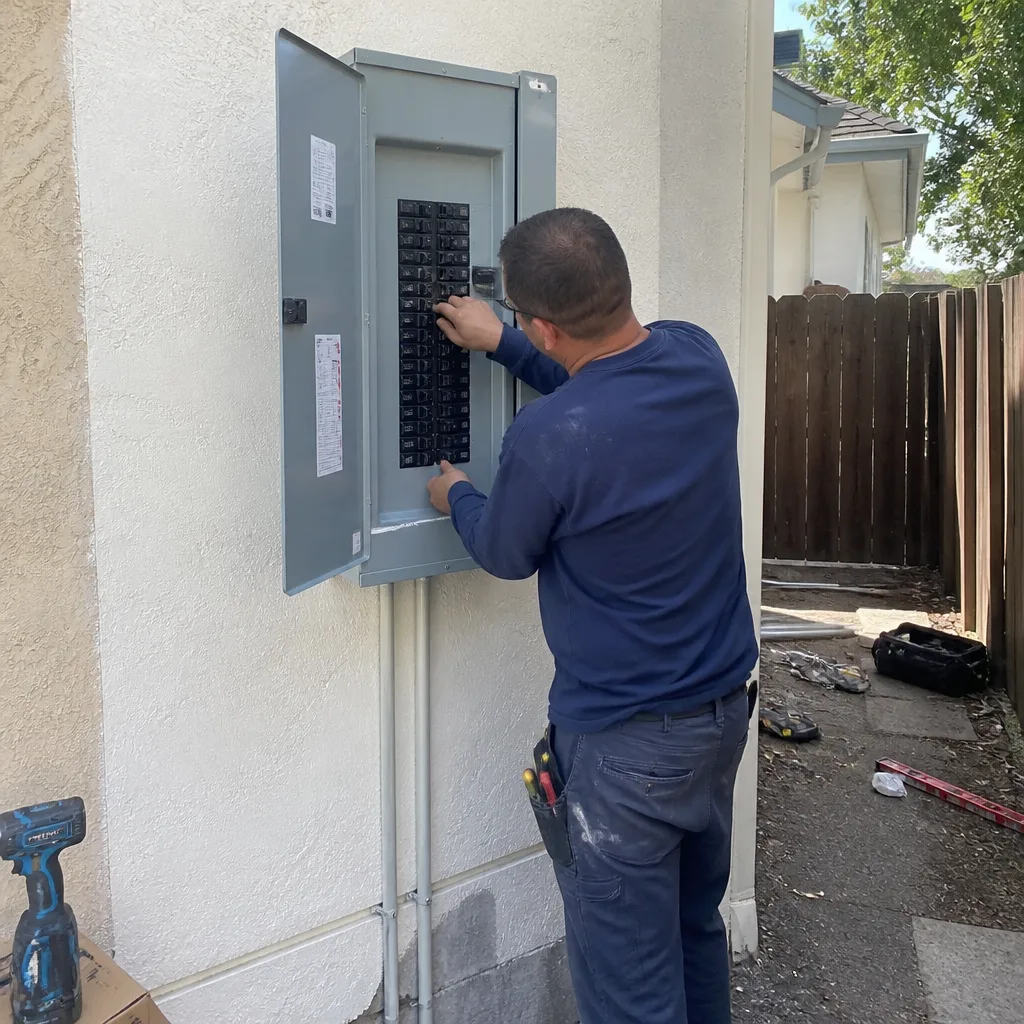
- Any work inside the electrical panel. Adding a circuit, replacing a breaker, or touching the bus bar is not a DIY task. In Los Angeles, any panel modification requires a permit and a licensed electrician’s signature. Homeowners who do this themselves void their homeowner’s insurance for any fire claim connected to the electrical system. We have seen insurance adjusters deny entire claims because the panel showed amateur wiring. The risk isn’t the shock. It’s the fire that starts six months later.
- Moving, cutting, or modifying load-bearing walls. In a seismic zone like Los Angeles, load-bearing elements are engineered, not guessed. Removing a wall without proper beam sizing and a permit can create structural failure during an earthquake. The repair cost after a DIY load-bearing mistake typically exceeds $15,000, and that’s before engineering fees.
- Any gas line work. Gas lines require a licensed plumber, full stop. A small leak behind a wall accumulates odorless, explosive gas. Your nose won’t catch it, but an inspection will. Unpermitted gas work is one of the most common reasons a home fails a resale inspection in Los Angeles.
- Waterproofing membranes in showers and bathrooms. This is the sleeper liability. A shower that looks fine for a year and then leaks into the floor joists below can cause $10,000 to $30,000 in rot and mold remediation. Schluter strips, the metal trim that seals the edge where tile meets flooring, and membrane systems require precise installation. There’s no visual sign of failure until the damage is extensive.
- Window and door replacement that changes the building envelope. In Los Angeles, any opening wider than 24 inches that’s modified requires flashing details that keep water out of the wall cavity. Manufacturer brands like ES Windows and CWS sell to contractors because the installation is part of the product’s warranty. A homeowner who self-installs loses the warranty and often creates slow leaks that ruin the framing. We occasionally see Mr-Glass window systems appear in DIY installs with the same result.
How DIY Mistakes Affect Your Homeowner’s Insurance in Los Angeles
Your homeowner’s insurance policy is a contract with exclusions. One of the most common exclusions is damage caused by “faulty workmanship” or “unpermitted alterations.” Insurance companies in California have grown increasingly aggressive about enforcing this language, especially in a high-cost market like Los Angeles where claims are expensive to litigate.
If a DIY electrical splice causes a fire, the insurer can deny the claim and cite the unpermitted work as the cause. If a self-installed water heater fails and floods the downstairs, the adjuster will ask who installed it. If the answer is the homeowner and the work was not inspected, the claim often dies on the spot.
The practical test is simple: would you want to explain, under oath, that you installed the thing that failed? For painting, the answer is obvious. For a gas line connection, the answer should terrify you.
We recommend that Los Angeles homeowners file a copy of every contractor invoice and permit with their insurance policy documents; our General Contractor Maintenance Checklist for Los Angeles Homeowners covers what to keep and for how long. When a professional does the work, the liability chain is clear. When you do it, you are that chain.
Unpermitted Work on Home Inspection Reports and Appraisal Value
Every home sold in Los Angeles undergoes a home inspection. Every credible inspector checks the kitchen and bathroom plumbing, the electrical panel, the water heater, and the attic for evidence of unpermitted work. They can spot DIY work from a hallway. Non-uniform breaker brands in the panel, PVC pipes that transition oddly, drywall with no mud on the seams all read as homeowner work.
When an inspector flags unpermitted work, the report goes to the buyer’s agent, who sends it to the buyer’s lender, who may pause financing until the city confirms the work was permitted and inspected. In Los Angeles, pulling a retroactive permit for work already completed requires opening up walls for inspection. The cost can exceed the original work by double.
Appraisal value takes a hit as well. An appraiser in the Los Angeles market compares your home to comps that sold with permitted improvements. A remodeled kitchen without permits has no verifiable value. It may not subtract from the base value, but it adds nothing. The buyer is effectively paying for a kitchen that doesn’t exist on paper.
If you’re considering sweat equity before a sale, do it only on tasks that don’t require a permit. Paint, hardware, trim, landscaping, and thorough cleaning return 2x to 3x their cost in sale price. Unpermitted structural or systems work subtracts from the deal. This is why Home Remodeling in Los Angeles with proper permits protects both your equity and your timeline.
The Hybrid Model: Coordinating Sweat Equity With a Licensed Contractor
The smartest Los Angeles homeowners don’t choose between DIY and hiring a contractor. They choose both, strategically. The hybrid model splits the project into your tasks and their tasks, with a clear sequence that doesn’t stall the professional crew.
Here’s how it works in practice, step by step:
- Agree on scope before demo begins. Your contractor gives you a written list of what you’ll handle and what they’ll handle. This avoids a crew showing up to a half-finished DIY job and charging you for the delay.
- You handle the unskilled demo. Removing non-load-bearing drywall, pulling up old flooring, and stripping wall coverings are safe DIY tasks. Do them before the crew arrives, and you’ll save labor hours.
- Rough-in stays with the contractor. Electrical, plumbing, framing, and waterproofing happen now. You stay away from the job site during this phase. Your only job is to make product decisions on time.
- You handle finish work at the back end. Priming and painting walls, installing cabinet hardware, and rehanging doors are tasks that don’t conflict with the contractor’s schedule. Coordinate a handoff day.
The trap to avoid: doing demo on a load-bearing wall because you misjudged it, then having the contractor stop work while an engineer confirms the structure. That mistake costs about $1,500 in engineer fees and a week of schedule delay in a busy Los Angeles renovation market.
We’ve coordinated dozens of hybrid projects. The honest truth: homeowners save about 10% to 15% of total project cost this way, and the savings are concentrated in painting and demo labor. If your goal is a 50% savings, the hybrid model won’t get you there, and cutting deeper puts the whole investment at risk.
DIY vs Professional: Real Cost Comparisons
Los Angeles remodeling costs run high compared to national averages, driven by labor rates, permit fees, and seismic requirements. Here’s what homeowners actually pay, based on our experience in the LA market.
- Interior painting (1,500 sq ft home): DIY cost $600 to $1,200 for paint and supplies. Professional cost $4,000 to $7,000. DIY savings real, risk low.
- Cabinet hardware replacement (kitchen): DIY cost $100 to $300. Professional cost $500 to $900. DIY savings real, risk zero.
- Non-load-bearing drywall demo (single room): DIY cost $0 plus disposal. Professional cost $800 to $1,500. DIY savings real, risk low if wall is truly non-load-bearing.
- Kitchen faucet swap: DIY cost $150 to $400. Professional cost $500 to $900. DIY savings real, but a bad supply line connection can flood the cabinet. Shutoff valves are your safety net.
- Shower remodel with waterproofing: DIY cost $2,000 to $4,000 in materials and a false sense of security. Professional cost $12,000 to $25,000. The professional’s membrane warranty and the permit are the value. Water damage remediation after a failed DIY shower is $10,000 to $30,000 and not covered by insurance.
- Adding an electrical circuit: DIY cost $100 in materials and a serious fire risk. Professional cost $600 to $1,200 with permit and inspection. No contest.
The pattern: DIY winds on finishes where the failure mode is cosmetic. Professionals win on systems where the failure mode is catastrophic. A Bathroom Remodeling in Los Angeles project involving waterproofing, plumbing, and electrical work should be professional from rough-in to trim.
Common Mistakes to Avoid
- Pulling an owner-builder permit on a home you plan to sell within five years. The resale disclosure shifts liability to you and often kills a deal. If selling is in your future, hire the licensed contractor and keep the permit in their name.
- Assuming your homeowner’s insurance covers DIY mistakes. It almost certainly doesn’t. If the insurer can trace the damage to unpermitted or faulty workmanship, the claim is denied. You’ll pay for remediation out of pocket.
- Confusing “walls” with “non-load-bearing walls.” In the San Fernando Valley hillsides and throughout Los Angeles, many interior walls carry shear load for seismic resistance. Demo without a structural check is gambling with your home’s frame.
- Installing windows or doors without understanding flashing. The leak shows up two years later as a brown stain on the ceiling and a $4,000 mold remediation bill. Brands like ECO Window Systems train installers for a reason.
- Skipping the permit on water heater replacement. In Los Angeles, water heater permits are cheap and inspections catch venting problems that kill people. The city requires a permit for good reason.
- Doing the mud-and-tape yourself to save money, then painting over it. Every seam shows through the paint. A $300 drywall finishing professional makes the room look like a professional built it. This is the last place to cut.
See the difference
 Before
 After
After Before
 After
After Before
 After
AfterWhen to Call a Professional
Call a licensed general contractor when the work touches any system your home depends on: electrical, plumbing including gas, structural framing, roofing, and waterproofing. Call one when a permit is required, because a permit means the work will be inspected by the city and must meet code. Call one when you’re facing a resale in the next five years and can’t afford a disclosure that scares buyers. Mason Remodeling offers free estimates in Los Angeles – call (803) 680-2547 to have us walk the site and give you a written price on the professional scope before you decide what to handle yourself.
Frequently Asked Questions
Yes, under the owner-builder exemption, a homeowner can pull permits and perform or supervise work on their primary residence. But you sign a disclosure at resale that shifts construction defect liability to you personally, and many lenders and buyers will not accept owner-builder work. The exemption exists, but it’s a liability vehicle, not a cost-saving loophole.
Painting, wallpaper, cabinet hardware, tile replacement that doesn’t touch waterproofing, flooring replacement that doesn’t alter subfloor structure, and trim carpentry are all permit-free. Any work that changes the building’s structure, utility systems, or envelope requires a permit, even if a contractor told you otherwise. Los Angeles Department of Building and Safety enforcement has grown stricter in recent years.
Yes. Inspectors flag amateur panel work, non-uniform plumbing transitions, visible drywall seams, and any modification that doesn’t match the city’s permit records. Unpermitted work kills deals and gives buyers leverage to demand a price reduction. It is not a hidden problem.
Generally no. Policies exclude damage caused by faulty workmanship or unpermitted modifications. If a DIY electrical splice causes a fire, the insurer can deny the claim. The safest position is to have professional work documented with permits and invoices.
It saves about 10% to 15% on total project cost, concentrated in painting, demo, and finish work. The savings are real but modest. The model works when the contractor defines the split in writing before the project starts and you stick to the agreed scope.
Failed waterproofing in a Los Angeles shower typically costs $10,000 to $30,000 to remediate and rebuild. A structural mistake on a load-bearing wall runs $15,000 or more. Electrical fire damage often exceeds $50,000 and may not be covered by insurance. Call us at (803) 680-2547 for an exact quote on repair work, and we’ll give you a written price before anything begins.
The Bottom Line
The DIY line in Los Angeles is drawn by consequence, not skill. If a task’s failure mode is cosmetic, do it yourself and keep the savings. If a task’s failure mode is fire, flood, structural collapse, or a denied insurance claim, hire a licensed contractor and keep the permit. The owner-builder exemption is a legal pathway that carries a long-term liability tail: know what you’re signing. Mason Remodeling has handled general contracting in Los Angeles since 2004, and we’ll give you a written price on the professional scope so you can decide what’s truly safe to handle yourself. Call (803) 680-2547 to schedule a free estimate from the Mason Remodeling home team.
Written by Isaac Pruett, Owner at Mason Remodeling, serving Los Angeles since 2004.