Last updated October 9, 2026



Free written scope consultation - allowances, timeline, and change-order rules on paper before a single trade is scheduled
DIY vs Professional Home Remodeling: What’s Safe to Do Yourself
Here’s a statistic that surprises most Los Angeles homeowners: the California Contractors State License Board receives thousands of complaints every year about unlicensed contracting, and many of those complaints come from homeowners who hired someone cheap, not from DIY projects gone wrong. But the bigger legal risk runs the other direction too. A homeowner in Los Angeles who installs their own electrical panel without a permit has committed a misdemeanor under California law, and if a fire later starts in that panel, the insurance company can walk away from the claim entirely. This home remodeling guide breaks down exactly which tasks you can legally and safely handle yourself in Los Angeles, which ones require a permit or a licensed contractor, and how to split the work so you save money without creating a liability nightmare when you eventually sell your home.
Styles & brands we work with




Quick Answer
In California, you can legally DIY cosmetic work like painting, trim, flooring, and cabinet hardware without any permit. But any project involving structural changes, electrical, plumbing, HVAC, or gas lines requires a permit, and some of that work legally requires a licensed contractor. The real question isn’t whether you’re handy enough – it’s whether doing the work yourself will trigger fines, void your insurance, or scare off buyers when you sell.
Table of Contents
- The Legal Tier List: What California Law Actually Says
- The Homeowner-Builder Permit: What It Allows and What It Reveals
- How DIY Work Affects Your Homeowner’s Insurance
- The Real Cost of DIY Mistakes in Los Angeles
- The Sweat Equity Framework: Where DIY Actually Saves You Money
- Why Material Selection Matters More Than Labor
- Los Angeles Building Code: What’s Different Here
- Common Mistakes to Avoid
- When to Call a Professional
- Frequently Asked Questions
- The Bottom Line
The Legal Tier List: What California Law Actually Says
California draws a hard legal line between what a homeowner can do without any oversight and what triggers permit requirements and contractor licensing rules. Understanding this distinction protects you from fines, code enforcement actions, and insurance denials. Here’s the breakdown based on current California Business and Professions Code and the California Building Standards Code as enforced in Los Angeles.
Tier 1: Unrestricted DIY (No Permit, No License Required)
- Interior and exterior painting – including walls, ceilings, doors, and trim
- Flooring installation – laminate, vinyl plank, engineered wood, carpet, and tile (as long as you’re not altering the subfloor structure)
- Cabinet hardware replacement – handles, pulls, hinges, and drawer slides
- Trim and molding installation – baseboards, crown molding, window casings
- Wallpaper removal and installation
- Fixture swaps – replacing a light fixture or faucet with a like-for-like unit where no rewiring or repiping is required
- Landscaping – planting, mulching, laying pavers without structural retaining walls
- Cabinet refacing – replacing doors and drawer fronts while keeping existing boxes
None of this work requires a permit in Los Angeles, and none of it requires a contractor’s license. You can do all of it yourself, hire a handyman, or bring in a professional crew. Your insurance policy stays intact, and there’s nothing to disclose at resale.
Tier 2: Owner-Builder Permitted Work (Permit Required, License Not Required)
California allows homeowners to act as their own general contractor on their primary residence through the owner-builder process. You can pull permits for and perform work that would otherwise require a licensed contractor, with one critical caveat: you must live in the home as your primary residence, and you must do the work yourself or hire licensed subcontractors to do it for you.
Permitted work you can owner-build in Los Angeles includes:
- Kitchen remodels that do not move load-bearing walls or alter the building envelope
- Bathroom remodels where plumbing fixtures stay in roughly the same location
- Window and door replacements of the same size
- Roof replacements (though most homeowners quickly realize this is a brutal DIY project)
- Minor structural work like removing a non-load-bearing interior wall
- Water heater replacement (gas water heater swaps in Los Angeles still require a permit and a licensed plumber for the gas connection in most cases)
Tier 3: Licensed Contractor Required (No Homeowner Exception)
Some work in California is so tightly regulated that even an owner-builder cannot legally perform it without a licensed contractor. This includes:
- Any gas line work – extending, relocating, or installing gas lines requires a C-36 plumbing contractor license or a C-20 HVAC license, no exceptions
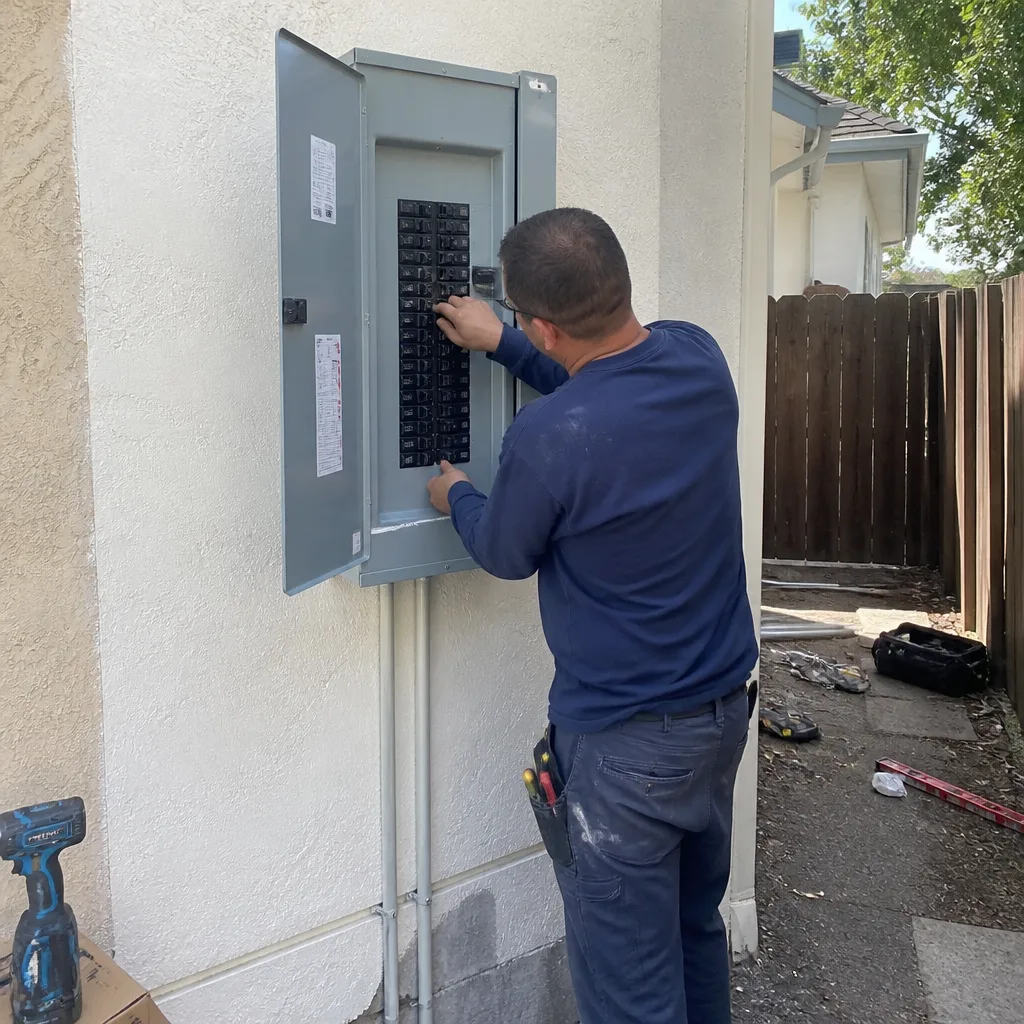
- Any electrical panel replacement or service upgrade – swapping a 100-amp panel for a 200-amp panel requires a C-10 electrical contractor license
- Any work requiring an engineer’s stamp – structural changes to load-bearing walls, foundation work, or additions that require a structural engineer’s calculations must be performed by a licensed contractor working from those drawings
- HVAC system installation or replacement – new furnace, AC, or ductwork requires a C-20 license
We’ve seen Los Angeles homeowners attempt to owner-build a kitchen remodel that involved moving a gas line for a new stove location. The inspector flagged it immediately. The homeowner had to stop work, hire a licensed plumber, re-pull the permit, and pay for two inspections instead of one. The gas line move added $800 to a project that was already over budget. That’s the cheap version of this story. The expensive version involves a gas leak and a fire.
The Homeowner-Builder Permit: What It Allows and What It Reveals
The owner-builder permit in California is a legal tool that lets you act as your own contractor on your primary residence. It sounds like a great way to save 20-30% on a remodel, and sometimes it is. But it carries obligations and consequences that most first-time remodelers don’t understand until it’s too late.
Here’s how it works in Los Angeles: you file a permit application with the Los Angeles Department of Building and Safety (LADBS) as the owner-builder. You sign a declaration stating that you own the property, that it’s your primary residence, and that you’ll either do the work yourself or hire licensed subcontractors under your direction. The permit is issued in your name, not a contractor’s name.
That last fact is the one that matters most. When you go to sell your home, California law requires you to disclose all work done under owner-builder permits. Buyers and their agents see that you acted as your own general contractor. Some buyers don’t care. Many do.
Real estate agents in Los Angeles consistently flag owner-builder work during transactions. Why? Because there’s no licensed contractor standing behind the workmanship. If a tile shower fails two years after you sold the house, the buyer has no contractor to call. They have you, the former owner, and a disclosure statement that says you built it. That creates real liability exposure under California’s seller disclosure laws.
There’s also the insurance problem. Most homeowner’s insurance policies cover owner-builder work during construction only if you’ve notified the insurer in advance and purchased a builder’s risk policy or an endorsement. We’ll cover that more below, but the short version is this: if you owner-build a bathroom remodel and the house floods during construction, your standard homeowner’s policy may deny the claim because you were acting as an unlicensed contractor on your own property.
If you do pursue an owner-builder permit in Los Angeles, follow this General Contractor Maintenance Checklist for Los Angeles Homeowners and do these three things before you start:
- Read the LADBS owner-builder declaration carefully. It’s not boilerplate. You’re legally certifying that you understand California labor law, that you’ll carry workers’ compensation insurance for any laborers you hire directly, and that you’ll be responsible for the work.
- Budget for the real cost of subcontractors. Licensed subs charge owner-builders more than they charge general contractors because they know owner-builders need more hand-holding and often cause schedule delays. That 20% savings can shrink to 5% quickly.
- Understand the resale disclosure requirement. You will disclose this permit at sale. Period. There’s no way around it, and failing to disclose is a much bigger legal problem than disclosing.
For most Los Angeles homeowners, the owner-builder route makes sense for small projects under $15,000 where the savings cover the extra hassle. For larger projects, hiring a licensed General Contractor in Los Angeles usually nets out to the same cost once you factor in your time, the markup on subcontractors, and the resale liability.
How DIY Work Affects Your Homeowner’s Insurance
This is the section most DIY guides skip, and it’s the section that matters most. Your homeowner’s insurance policy is a contract, and that contract has specific language about who can perform work on your home and what happens when unpermitted or unlicensed work causes damage.
Here’s what we see in Los Angeles, based on conversations with insurance adjusters and the claims we’ve seen come through our office:
Scenario 1: Painting, Trim, Flooring
No insurance implications. Your policy doesn’t care if you painted your own living room, and a paint spill doesn’t create a coverage question. This is genuinely unrestricted DIY territory.
Scenario 2: DIY Plumbing or Electrical That Causes Damage
This is where claims go sideways. If you install a dishwasher yourself, the supply line fails, and water damages your kitchen floor and the ceiling below, the insurance adjuster will ask who installed the dishwasher. If the answer is “I did,” the adjuster will look for a permit. No permit? The claim can be denied for “faulty workmanship” or “lack of maintenance.” Some policies have specific exclusions for damage caused by unpermitted work.
We’ve seen a Los Angeles homeowner denied a $22,000 water damage claim because a DIY toilet installation failed at the wax ring. The adjuster determined the toilet was installed without a permit and without a licensed plumber. The damage was excluded. The homeowner paid out of pocket.
Scenario 3: Unpermitted Work Discovered at Claim Time
This is the permanent exclusion problem. You DIY a bathroom remodel without permits. Five years later, a pipe bursts in that bathroom and floods the house. The insurance adjuster investigates, discovers the unpermitted remodel, and denies the claim. Not just for the bathroom damage – potentially for the entire water damage event because the unpermitted work created a condition that contributed to the loss.
The homeowner’s insurance contract language varies by carrier, but most policies in California include language excluding coverage for damage caused by “unpermitted construction” or “work performed without required permits.” Even if you did the work correctly, the lack of a permit can void coverage.
The Fix Before You DIY
- Call your insurance agent. Say these words: “I’m planning to do [specific work] myself. Does my policy cover me if something goes wrong, and do I need a rider or endorsement?” Get the answer in writing.
- If you’re owner-building, request a builder’s risk endorsement. This covers the structure and materials during construction. It’s cheap – often $200-400 for a typical remodel – and it closes the coverage gap.
- Keep every permit, inspection report, and receipt. If you ever do file a claim, documentation is the difference between a paid claim and a denied one.
The Real Cost of DIY Mistakes in Los Angeles
Let’s put dollar figures on the three most expensive DIY mistakes we see in Los Angeles homes. These aren’t worst-case scenarios. They’re typical outcomes when skilled, well-intentioned homeowners attempt permitted work without the right experience or a General Contractor Maintenance Schedule: What to Do and When.
Tile Waterproofing Failure
A tile shower is a system, not just tile on a wall. The waterproofing goes behind the tile – a membrane, a foam backer board, or a liquid-applied coating. If the waterproofing fails or is installed incorrectly, water gets into the wall cavity and rots the framing.
In Los Angeles, the cost to demo and rebuild a failed tile shower runs $8,000 to $15,000 depending on size and finish level. The original DIY project probably saved the homeowner $4,000 to $6,000 in labor. The net loss is $2,000 to $11,000, and that doesn’t include the water damage to the adjacent framing, which can add another $3,000 to $8,000 if the leak persisted.
The waterproofing products matter here. We use Schluter systems – the orange foam board and membrane – or equivalent from Wedi or Laticrete. These are professional-grade products with precise installation requirements. The homeowner at a big-box store often ends up with a liquid membrane applied too thin or a cement board with no membrane at all. That’s a failed shower waiting to happen.
Load-Bearing Wall Removal Without Proper Support
You can’t tell if a wall is load-bearing by looking at it. Sometimes the wall under the center of the house is non-structural, and sometimes the wall at the edge of the bedroom is carrying roof load. In Los Angeles, where many homes are 1920s-1950s construction with post-and-beam framing, a load-bearing wall may be doing work you can’t see from the surface.
Removing a load-bearing wall without installing a properly sized beam and proper point loads leads to sagging floors, cracked drywall, sticking doors, and eventually structural failure. The fix requires a structural engineer’s evaluation ($1,500 to $3,000), engineered beam installation ($5,000 to $12,000 depending on span and access), and drywall repair and repainting ($2,000 to $5,000).
The original DIY wall removal saved maybe $1,500 in demo labor. The correction costs $8,500 to $20,000. And if the unpermitted work is discovered during a resale inspection, the buyer will demand repairs before closing or walk away entirely.
DIY Electrical That Fails Inspection
A homeowner in Los Angeles can legally replace outlets and switches, install dimmers, and swap light fixtures. What they cannot do without an electrical permit is run new circuits, add a subpanel, or replace the main panel. The latter is a misdemeanor under California law without a C-10 license.
The typical DIY electrical failure we see is a homeowner who runs a new circuit for a kitchen remodel, does it wrong, and gets flagged during the required inspection. The inspector fails the work, and now the homeowner has two choices: rip out the wiring and redo it correctly, or hire a licensed electrician to fix it. The electrician charges $800 to $2,500 to correct homeowner wiring, plus the homeowner pays for a re-inspection. The original savings from doing it themselves was maybe $1,000. It’s a wash at best.
Worse is the hidden failure. DIY wiring that isn’t caught by an inspector because the homeowner never pulled a permit. That wiring sits in the walls and does its job until it doesn’t. Loose connections arc. Undersized wire overheats. And when the fire starts, the insurance adjuster finds the unpermitted wiring and denies the claim.
The Sweat Equity Framework: Where DIY Actually Saves You Money
Here’s the practical, money-saving framework. The smart Los Angeles homeowner doesn’t try to do everything themselves, and they don’t hand everything to a contractor. They split the project into DIY territory and pro territory, and they do it in the right order.
Step 1: Do the Demo Yourself (Sometimes)
Demo is physically hard but legally simple. Removing old cabinets, tearing out carpet, pulling down drywall – none of this requires a permit, and none of it requires a license. But demo can go wrong: you hit a water line behind the cabinet and now you have a flood. You tear out a wall and discover it was load-bearing. You remove the drywall and find asbestos in a pre-1978 Los Angeles home.
If you demo, do it after the contractor has marked the internals – pipes, wires, ducts. And stop immediately if you find anything unusual. Asbestos abatement in Los Angeles runs $2,000 to $8,000 depending on the scope, and it requires a certified abatement company. Don’t touch it yourself.
Step 2: Let the Pros Rough In the Systems
Framing, plumbing, electrical, and HVAC rough-in are the heart of the remodel. This is where permits get pulled, inspections happen, and the quality of the work determines whether the finished project fails in five years or in fifty. Hire licensed pros for this. You’re not saving money by doing it yourself, and you’re potentially creating a legal and insurance problem.
Step 3: Reclaim the Finish Work
Once the walls are closed up and the systems are signed off, the finish work opens up again. Painting, trim installation, cabinet hardware, shelving, window treatments – this is all unrestricted DIY territory. You can genuinely save $3,000 to $8,000 on a typical Los Angeles remodel by doing your own painting and finish carpentry. And painting is one of the few trades where a careful homeowner can match professional quality.
Step 4: Hire the Right Contractor for the Right Scope
If the project involves multiple trades – a kitchen remodel with electrical, plumbing, and structural work – hire a general contractor who can pull all the permits, coordinate the subs, and take responsibility for the finished product. At Mason Remodeling, we deliver a written price before any work starts, no exceptions. That’s not a sales tactic. It’s how we prevent the exact dispute that happens when a verbal estimate meets a change order. You can read more about our approach on the Mason Remodeling home page.
Why Material Selection Matters More Than Labor
Here’s a truth most remodel guides miss: the difference between a remodel that lasts 10 years and one that lasts 30 years is more about materials than labor. A competent contractor with cheap materials delivers a cheap result. A competent contractor with professional-grade materials delivers a lasting result.
Los Angeles homeowners have access to professional-grade product lines through contractors that big-box stores simply don’t carry. Quartz countertops from Cambria or Silestone are fabricated to specification with precise edge profiles and professional installation systems. The slabs you see at retail stone yards are often culls or overstock – the remnants of production runs sold off at discount. A professional remodeler orders from the full production range.
The same applies to plumbing fixtures. A Kohler or Moen faucet purchased through a professional supply house is the same model number as the one at the retail store, but it often carries a different warranty. Professional-supplied fixtures typically include a lifetime warranty for the original owner when installed by a licensed plumber. The retail version often carries a 1-year limited warranty. Same fixture, different protection, based on where you bought it and who installed it.
This doesn’t mean you should overpay for materials. It means you should ask your contractor where the materials come from and what warranty applies. A written answer to that question is worth more than a verbal promise.
Los Angeles Building Code: What’s Different Here
Los Angeles has some of the strictest building codes in the country, and some of the oldest housing stock where those codes are enforced. Here’s what you need to know before you start any remodel, DIY or professional, plus more guides & resources.
Seismic Retrofitting
Los Angeles sits in a seismic zone, and the LADBS has mandatory seismic retrofit requirements for certain building types. Pre-1980 soft-story buildings and pre-1978 cripple wall foundations are the big ones. If your remodel touches the foundation, the shear wall, or the cripple wall, the building department may require seismic retrofitting as a condition of the permit. This can add $5,000 to $20,000 to a remodel, and it’s not optional. No homeowner exemption applies.
Title 24 Energy Requirements
California’s Title 24 energy code applies to any remodel that changes the building envelope – windows, doors, insulation, or the HVAC system. In Los Angeles, that means a window replacement triggers Title 24 compliance, which may require low-E glass, proper flashing, and a blower door test. DIY window installs that skip Title 24 will fail inspection and may need to be redone.
Water Conservation Ordinances
Los Angeles has specific water conservation requirements for plumbing fixtures. Toilets must be 1.28 gallons per flush or less. Showerheads must be 2.0 gallons per minute or less. Bathroom faucets must be 1.2 gallons per minute or less. If you’re DIYing a bathroom update, buy fixtures that meet these standards or you’ll fail the final plumbing inspection.
LADBS Plan Check
Permitted remodels in Los Angeles go through plan check, and plan check can take 2-6 weeks for a typical kitchen or bath remodel. Homeowners who owner-build often underestimate this timeline and get stuck holding a torn-apart kitchen while waiting for plan approval. A licensed contractor typically has existing relationships with LADBS and can move through the process faster, though even we’re subject to the same queue.
For a deeper look at how these requirements play out in a full remodel, see our Home Remodeling in Los Angeles guide.
Common Mistakes to Avoid
- Pulling the permit and then hiring an unlicensed handyman to do the work. The permit is in your name, which means you’re the general contractor. If the handyman gets hurt, you’re liable for workers’ comp. If the work fails, you’re the one the inspector comes after.
- Assuming “it’s just a small project” means “no permit needed.” A small gas line move still requires a permit and a licensed plumber in Los Angeles. Small doesn’t equal exempt.
- Doing electrical work without checking whether the circuit is live. This kills people. Turn off the breaker, verify with a non-contact voltage tester, and still treat every wire as live until proven otherwise.
- Demolishing without checking for asbestos. Los Angeles homes built before 1978 frequently have asbestos in flooring, drywall compound, and insulation. Test before you demo.
- Buying the cheapest materials to stretch the budget. A $99 faucet will fail in 3-5 years. A Kohler or Moen fixture through a professional supply house will last decades. The cheap faucet costs more over time.
- Not getting the contractor’s price in writing before work starts. Verbal estimates are how change orders happen. In California, any home improvement project over $500 requires a written contract by law. If your contractor won’t put it in writing, walk away.
When to Call a Professional
Call a licensed contractor when the project touches structural elements, electrical panels or new circuits, gas lines, main water lines, sewer lines, or anything that requires an engineer’s stamp. Call a professional when the project is too big to finish on weekends, when you need a permit pulled, or when you’re not certain you can meet Los Angeles building code. Call a professional when the cost of a mistake exceeds the cost of doing it right. Mason Remodeling offers free estimates in Los Angeles – call (803) 680-2547 to schedule yours. You’ll get a written price before any work starts, and that price won’t change.
Frequently Asked Questions
Yes, for any work that changes the structure, electrical, plumbing, HVAC, or gas systems. Cosmetic work like painting and flooring does not require a permit. Los Angeles enforces this through the LADBS, and unpermitted work discovered during insurance claims or resale inspections can void coverage or derail a sale. Call (803) 680-2547 if you’re unsure whether your project needs a permit.
You can replace outlets, switches, and light fixtures without a permit. You cannot run new circuits, replace a panel, or add a subpanel without an electrical permit and, for panel work, a C-10 license. A licensed electrician will charge $800 to $2,500 for a panel upgrade in Los Angeles, and it’s money well spent.
You must disclose it on the seller’s disclosure form. Failing to disclose creates legal exposure for fraud, and buyers can sue for repair costs after closing. In Los Angeles, unpermitted additions and unpermitted electrical work are the two most common deal-killers during escrow.
Yes, through the owner-builder permit process, but only on your primary residence. You’ll need to pull permits in your own name, hire licensed subcontractors, and carry workers’ comp for any laborers you hire directly. The savings typically run 10-15% on a standard remodel, and that gap narrows once you factor in your time and the subcontractor markup on owner-builder jobs.
On a typical Los Angeles kitchen remodel, doing your own demo and painting saves roughly $3,000 to $6,000. Demo labor runs $1,500 to $3,000 depending on the kitchen size, and professional painting runs $2,000 to $4,000. Both are legally unrestricted DIY work.
Tile waterproofing failure. The fix runs $8,000 to $15,000 for a full shower rebuild, plus $3,000 to $8,000 in water damage repair if the leak spread. The original DIY savings was maybe $5,000. The net loss is $6,000 to $18,000. For bathrooms done right the first time, see our Bathroom Remodeling in Los Angeles guide.
The Bottom Line
The DIY-vs-pro question in Los Angeles isn’t about how handy you are. It’s about the law, the insurance contract, and the resale disclosure. Paint your own walls. Install your own flooring. But leave the structural, electrical, plumbing, and gas work to licensed pros who carry the permits and the liability. When you hire a contractor, get the price in writing before work starts, confirm the materials are professional grade, and ask about the warranty in specific terms. If the work isn’t right, a written guarantee should back it for a full year. That’s the standard we hold at Mason Remodeling, and it’s the standard every Los Angeles homeowner should expect.
Written by Isaac Pruett, Owner at Mason Remodeling, serving Los Angeles since 2004.
See the difference
 Before
 After
After Before
 After
After Before
 After
After