Last updated October 9, 2026



Free written scope consultation - allowances, timeline, and change-order rules on paper before a single trade is scheduled
DIY vs Professional Construction: The Los Angeles Homeowner’s Decision Guide
Here’s the counterintuitive truth most guides miss: the DIY vs. professional construction decision in Los Angeles is rarely decided by skill. It’s decided by statute, insurance policy language, and what happens during a home sale. California’s legal framework doesn’t just allow professional contractors to do more than homeowners. It actually places owner-builders in a position of personal liability that many discover too late. This guide lays out where the legal lines fall, what DIY really costs after rework and insurance gaps, and where a homeowner can legitimately save money by doing the work themselves alongside a licensed general contractor in Los Angeles. For DIY vs Professional General Contractor: What’s Safe to Do Yourself, see our dedicated comparison.
Quick Answer
In Los Angeles, DIY construction is legally permissible for cosmetic work and minor repairs under $500 in labor and materials, but any project requiring structural, electrical, plumbing, or mechanical changes triggers a licensed contractor requirement under California Business and Professions Code 7048. Pulling an owner-builder permit puts you on record as the contractor, which means full personal liability for code compliance, and unpermitted work routinely costs Los Angeles sellers $10,000 to $40,000 in escrow credits, retroactive permits, or demolition before closing. The financially sound middle path: handle cosmetic tasks yourself, and let a licensed Los Angeles contractor manage anything behind the walls.
Styles & brands we work with


Table of Contents
- What California Law Says You Can (and Cannot) Do Yourself
- What Unpermitted DIY Work Does to a Los Angeles Home Sale
- The Insurance Gap: What Your Homeowner’s Policy Actually Covers During DIY
- The Real Cost of DIY: A Line-by-Line Framework
- The Middle Path: DIY Finishes, Licensed Contractor for the Rest
- When DIY Genuinely Wins: Projects That Make Sense
- Los Angeles Code Enforcement: What Inspectors Actually Flag
- How to Vet a Licensed Contractor in Los Angeles
What California Law Says You Can (and Cannot) Do Yourself
California Business and Professions Code Section 7048 allows a property owner to act as their own contractor, but only under narrow conditions. The owner-builder exemption applies when you personally perform or directly supervise the work, you live in the dwelling (or will live there following completion), and the work is not intended for sale or rent within one year. If you plan to sell the home within 12 months of completion, the owner-builder path is closed to you by law.
Separate from the owner-builder statute, Section 7048 also sets a hard dollar threshold: any project where the combined value of labor and materials exceeds $500 requires a licensed contractor. Here’s how that plays out in a typical Los Angeles kitchen or bathroom renovation:
Legally permissible as DIY (under $500, non-structural)
- Painting interior walls, ceilings, and trim
- Replacing cabinet hardware, faucets, and light fixtures (with existing wiring and plumbing intact)
- Installing floating shelves, towel bars, and closet organizers
- Replacing a toilet when the flange and wax ring are sound and no plumbing modifications are required
- Repairing drywall cracks and nail pops with spackle and sanding
- Caulking tubs, sinks, and countertop edges
- Replacing a standard light switch or outlet cover (not the device itself if wiring changes are needed)
Requires a licensed California contractor (regardless of cost)
- Any structural change: removing or altering load-bearing walls, modifying foundations, cutting roof framing
- Any electrical work beyond like-for-like device replacement: adding circuits, moving outlets, installing recessed lighting
- Any plumbing work beyond fixture replacement: relocating drain lines, altering supply lines, adding a second sink
- Any gas line work, including moving a range or dryer connection
- Any mechanical work: HVAC duct modifications, furnace replacement, water heater installation
- Any work requiring a building permit with structural plans prepared by a licensed engineer or architect
- Window and door openings that enlarge or relocate the rough opening
In our experience across Los Angeles neighborhoods, the most common DIY mistake is assuming that “cosmetic” and “legal” mean the same thing. Replacing a bathtub with a tiled shower feels cosmetic. But moving the drain, roughing in new valves, and waterproofing to California code all require permits and a licensed contractor. The City of Los Angeles Department of Building and Safety (LADBS) treats unpermitted plumbing modifications as a serious violation precisely because a failed drain line or leaky valve behind a wall can destroy an entire first-floor structure over time.
What Unpermitted DIY Work Does to a Los Angeles Home Sale
In Los Angeles, unpermitted construction gets discovered during home sales with remarkable regularity. It isn’t a maybe. It’s a when-and-how-much question. Here’s the sequence of events we’ve watched play out in LA transactions.
Discovery happens in one of three ways. First, the seller’s Real Estate Transfer Disclosure Statement requires disclosure of any known work done without permits, and failing to disclose opens the seller to fraud claims after close. Second, home inspectors routinely flag workmanship that doesn’t match the building record, like a bathroom in what county records show as a closet. Third, buyers’ lenders (and FHA and VA appraisers especially) compare the property’s actual configuration against tax assessor records and permit history.
Once unpermitted work is discovered, negotiations shift against the seller. Here are the specific financial consequences across the Los Angeles market:
- Retroactive permit fees: LADBS charges 2 to 3 times the original permit fee for retroactive permits, and that assumes the work can be approved in place. Fees for a retroactive bathroom permit in Los Angeles typically run $1,200 to $2,800, not including corrections.
- Required demolition: if hidden work cannot be verified (wiring inside closed walls, drain lines under concrete), the City requires removal of finished surfaces for inspection. In kitchens and bathrooms, this commonly costs $5,000 to $15,000 in repair work after the inspection.
- Escrow credits: Los Angeles buyers routinely demand credits of $10,000 to $30,000 when they learn the square footage, bed or bath count, or infrastructure isn’t permitted. Sellers absorb that directly on the closing statement.
- Insurance denials: if an unpermitted installation later causes damage (a slow plumbing leak from an owner-built shower, a wiring fault from a DIY circuit), the homeowner’s insurer can deny the claim on the grounds that the work violated policy terms requiring permits and licensed contractors.
One Los Angeles specific factor: the pre-1960 housing stock. Many Eagle Rock, Mid-Wilshire, and South LA homes have knob-and-tube wiring and cast-iron drain lines that are grandfathered as long as they remain unmodified. Once a DIY homeowner touches that system, the grandfathered status ends, and the entire circuit or drain run must be brought to current code. That single decision routinely converts a $300 DIY job into a $8,000 to $20,000 professional correction.
The Insurance Gap: What Your Homeowner’s Policy Actually Covers During DIY
Here is the one question almost nobody asks before starting a DIY renovation: what does your homeowner’s insurance cover if something goes wrong during construction? The answer, in most Los Angeles policies, is very little.
Standard homeowner’s insurance covers sudden and accidental damage to a finished dwelling. The policy assumes the dwelling is complete. During active construction, even a two-week renovation, the property is in a state that insurers classify differently. Most policies contain a “vacancy or under construction” exclusion, or they require a builder’s risk policy, which is a separate policy that covers only the structure during construction, not the people doing the work.
Here’s the gap in plain terms:
- Your injured helper: if a neighbor or day laborer helps you lift cabinets and injures their back, your homeowner’s policy generally excludes injuries to people working on your behalf. You are personally liable for medical costs and lost wages. A licensed contractor carries workers’ compensation insurance for exactly this exposure.
- Your mistake: if you accidentally cut a water line inside a wall and flood the downstairs unit in a duplex, your liability coverage may respond only if the work was performed by a licensed contractor. Many Los Angeles policies specifically exclude damage caused by unlicensed construction work.
- Theft of materials: building materials stored on site are covered differently than personal property. Once you’ve removed cabinetry or left tools and tile staged in a garage, your policy may cap coverage far below replacement cost.
- Premises liability: if a delivery person trips over your demolition debris pile in the driveway, your standard liability limit applies, but the insurer may deny the claim if active unpermitted construction was underway.
A licensed Los Angeles contractor carries two policies that close this gap: general liability coverage (typically $1 million to $2 million) for property damage and bodily injury caused by the contractor’s work, and workers’ compensation insurance covering every employee on your property. Additionally, the contractor’s own builder’s risk coverage protects the project itself. When our crews work on a bathroom or whole-home remodel in Los Angeles, the homeowner never becomes the person on record for an injured worker. That transfer of risk alone justifies professional management for any physically substantial renovation.
The Real Cost of DIY: A Line-by-Line Framework
Most DIY cost comparisons use only materials. That’s the wrong number. The honest comparison includes your time, learning-curve waste, tool rentals or purchases, potential rework, and the future resale cost of mistakes. Here is a line-by-line framework using a typical Los Angeles bathroom vanity replacement as the example, first the DIY route:
DIY: Replace a 48-inch Bathroom Vanity (Los Angeles)
- Materials (vanity, faucet, P-trap, supply lines, drain extension): $600 to $1,400
- Tool purchases or rentals (basin wrench, pipe cutter, shims, level, caulk gun): $60 to $150
- Learning-curve waste (a second P-trap, a re-cut drain extension, an extra tube of caulk): $25 to $60
- Your time (planning, shopping, 2 to 3 attempts at installation, 8 to 14 total hours): $250 to $700 at a reasonable $30 to $50 hourly value
- Potential rework (leak at the trap discovered days later, requiring partial disassembly): $0 to $200
- Total realistic DIY cost: $935 to $2,510
Now the licensed contractor route for the same project:
Professional: Replace a 48-inch Bathroom Vanity (Los Angeles)
- Materials (same range, contractor pricing): $600 to $1,400
- Labor (typical Los Angeles rate for a single-day vanity swap, including haul-away and clean-up): $450 to $900
- Warranty and rework coverage: included
- Total professional cost: $1,050 to $2,300
The gap is narrower than most homeowners expect. And the comparison doesn’t yet include the cost of a mistake. One incorrect supply-line connection on a second-floor bathroom in a Los Angeles home can leak behind the wall for weeks before damage appears. Restoration for hidden water damage starts around $2,500 for extraction and drying, and it climbs quickly from there.
For larger projects, the numbers shift further toward professional work. Our team at Mason Remodeling, part of the Threshold Group family of home-service companies since 2004, delivers a written price before any work begins. That pricing practice means homeowners compare real scope against real dollar numbers, which is the only way this framework works honestly.
The Middle Path: DIY Finishes, Licensed Contractor for the Rest
Most guides present DIY and professional construction as an either-or choice. The smarter approach, and the one we recommend to Los Angeles homeowners who want to save money without taking on regulatory risk, is a split-scope renovation. A licensed general contractor manages permits, framing, plumbing, electrical, and inspections, while the homeowner handles clearly defined finish work. Here’s how to structure it:
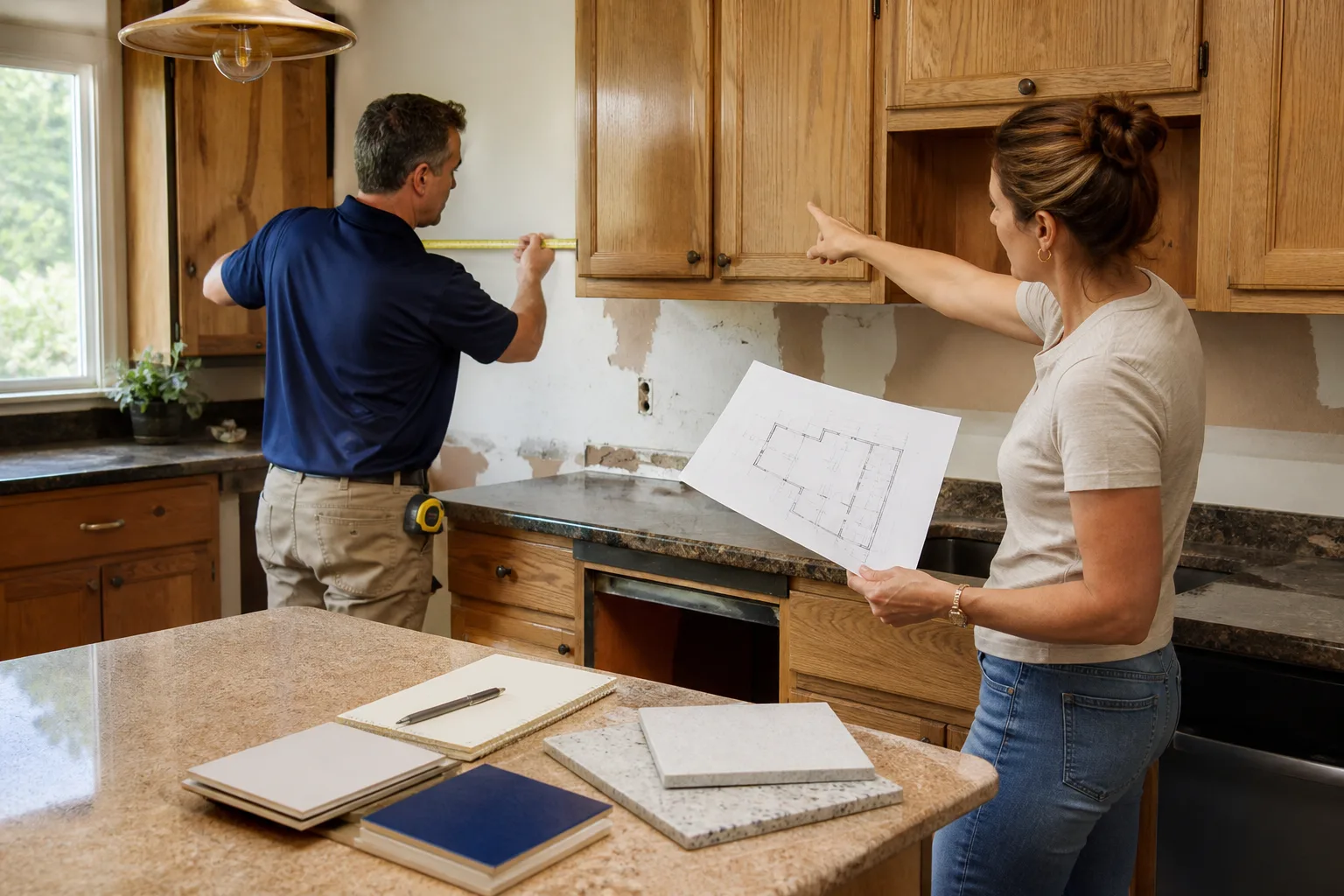
- Start with the permit scope. The licensed contractor identifies what requires a permit and who will perform that work. In a typical Los Angeles kitchen remodel, this includes any wall removal or relocation, plumbing rough-ins, electrical rough-ins, and exhaust hood installation. Homeowner involvement in this scope is limited to selecting finishes and fixtures.
- Define the finish work you’ll handle. Painting is the most commonly retained DIY task, and it’s a good one. So are installing cabinet hardware, hanging window treatments, assembling and installing free-standing or wall-mounted shelving, swapping out light fixture canopies (not wiring), and caulking trim and baseboards. These tasks require no permit, are low-risk, and are genuinely hard to fail.
- Put the split in the written contract. A professional contractor should itemize the scope it is responsible for and note the homeowner-performed work as an explicit exclusion. This protects both parties. If the homeowner’s painting doesn’t meet the contractor’s warranty terms, the exclusion prevents disputes. We write these splits into contracts regularly, and the good-faith clarity saves every relationship.
- Sequence your work after inspections. Homeowner finish work should never happen before the relevant inspection. In a bathroom, for example, the shower pan, waterproofing, and drywall work must be inspected before tile goes in, and painting should wait until drywall inspection passes. A licensed contractor will coordinate the inspection schedule around your work windows.
- Keep the contractor on speed dial for the hard parts. Even in a split-scope project, the contractor remains the responsible party for the permitted scope. That means if you discover a plumbing mis-rough during your finish work, the contractor corrects it under the original permit. You’re never left holding a building department citation alone.
The 365-Day Done Right Promise is another reason the split-scope approach works in Los Angeles. If a Mason Remodeling project has a defect within 365 days from the completion date, our team makes it right at no cost to the homeowner. That coverage applies to the work our crews performed, and it’s stated in writing with clear terms, exactly as it should be.
When DIY Genuinely Wins: Projects That Make Sense
There are projects where DIY produces real savings with minimal risk. These are the ones we tell Los Angeles homeowners to enjoy doing themselves. The common thread is low structural consequence, no permit requirement, and an easily corrected failure mode.
- Interior painting: the classic win. Los Angeles homes with 8-foot ceilings and standard rooms cost $3,500 to $7,000 for professional interior painting. A homeowner willing to do careful prep work (taping, patching, priming) typically spends $600 to $1,200 in quality paint and supplies. The savings are real, the risk is minimal, and repainting a wall you dislike is a weekend fix.
- Cabinet hardware replacement: swapping knobs and pulls costs $200 to $500 in materials and requires a drill, a template, and about one day. Professional installation adds $150 to $300 in labor. More importantly, this project involves zero plumbing, electrical, or structural risk, and the finished result is controlled entirely by your patience with the template.
- Caulking and weatherstripping: re-caulking a bathtub or kitchen sink is a maintenance task, not a construction project. Materials cost under $30. The key trade secret: use 100% silicone caulk (not acrylic latex) in wet areas, and use a smooth, continuous motion with a wet finger or smoothing tool. Los Angeles’s dry climate and mild temperatures make caulk cures more forgiving than in humid coastal markets, which works in the homeowner’s favor.
- Closet systems: installing a modular closet system from a major brand costs $400 to $1,200 and takes a weekend. Professional custom closet installation runs $2,500 to $6,000 for the same practical result. The structural risk is limited to wall anchors and the stud finder, and failure mode is a sagging shelf, not a flooded floor.
- Demolition (non-structural only): this is the surprise entry. Pulling out old cabinets, flooring, and tile backsplash before a contractor arrives saves labor costs, and many licensed Los Angeles contractors will credit the homeowner for pre-completed demolition. The critical rule: confirm in writing with your contractor exactly what demolition is safe. Never touch anything attached to a wall you haven’t verified as non-load-bearing.
Los Angeles Code Enforcement: What Inspectors Actually Flag
Los Angeles inspectors are not looking for perfection. They are looking for deviations from the California Building Code that affect safety, and they follow a specific list of recurring violations. Understanding what they flag helps homeowners understand why professional construction matters in Los Angeles specifically. Our General Contractor Maintenance Checklist for Los Angeles Homeowners covers what inspectors prioritize.
The most common LADBS inspection failures in residential remodels:
- Improper waterproofing in wet areas: Los Angeles inspectors are particularly strict on shower pan and wet wall waterproofing given California’s history of mold litigation. A shower that lacks a proper Schluter strip (the metal trim that seals the edge where tile meets flooring) or an improperly sloped pan will fail inspection on the first visit.
- Grounding and bonding on electrical work: Los Angeles homes built before 1990 often have ungrounded two-prong outlets that are grandfathered. The moment a homeowner or contractor touches any part of that circuit, the entire circuit must be brought to current code. Inspectors check for proper grounding at every device, and failure here is immediate.
- Kitchen exhaust requirements: Los Angeles requires kitchens to have mechanical ventilation. A range hood that recirculates air is legal, but only if the kitchen has a window meeting minimum size requirements. Install the wrong hood or block the window, and the final inspection fails until corrected.
- Title 24 energy compliance: any new window, exterior door, or lighting fixture in a Los Angeles renovation must meet California’s Title 24 energy standards. Inspectors check fixture labels and window ratings against the approved plans. DIY window replacements that don’t meet Title 24 often pass building inspection only to fail final HERS (Home Energy Rating System) verification, which adds $500 to $1,000 in correction costs.
- Seismic strapping on water heaters: Los Angeles is in seismic zone D, and water heaters must be double-strapped at specific heights with specific hardware. A DIY water heater replacement without proper strapping is an automatic fail and a genuine safety concern in earthquake country.
The takeaway for Los Angeles homeowners: building code in LA is not a suggestion. It’s enforced with real consequences, and the correction path is always more expensive than doing it right the first time with a licensed contractor who pulls permits as standard practice.
How to Vet a Licensed Contractor in Los Angeles
If this guide has convinced you that certain projects belong in professional hands, the next step is finding a contractor you can trust. Los Angeles has more licensed contractors than any US city, but license status alone is a baseline, not a guarantee. Here’s what our Los Angeles team tells homeowners to verify before signing a contract:
- Verify the license with the California Contractors State License Board (CSLB). Search by the license number on the CSLB website, confirm the name matches the person or company you are dealing with, and check for active workers’ compensation coverage. In Los Angeles, license theft and fraudulent use of other contractors’ numbers is common enough that this step is non-negotiable.
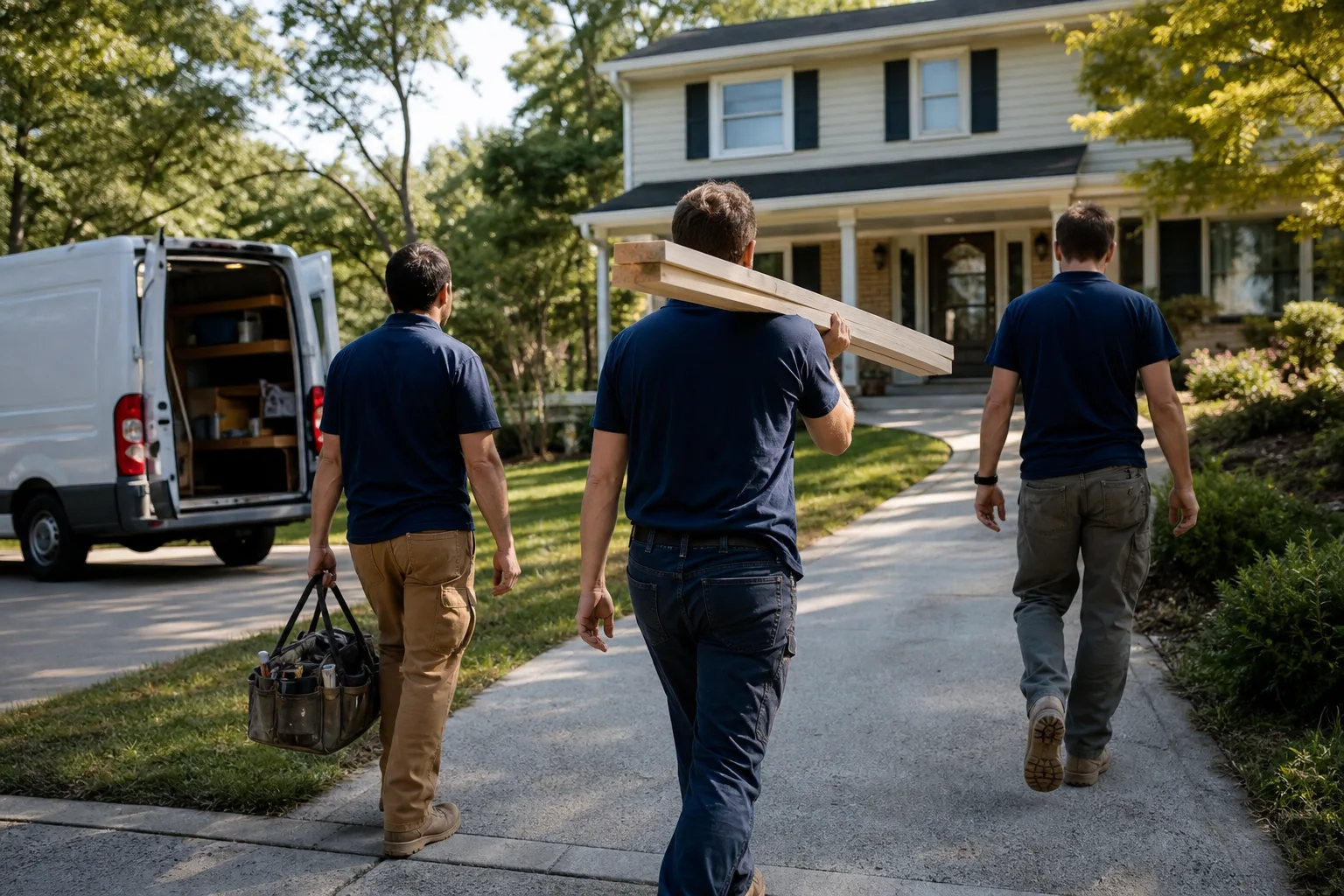
- Ask who, by name, will be in your home. This is the step most homeowners skip. A general contractor may be licensed, but the actual crew members are often subcontractors the homeowner has never met. Ask the contractor to provide names, photos, and background-check confirmation for every person who will enter your home. The Threshold Standard at Mason Remodeling, which applies to every one of our Los Angeles projects, includes exactly this: background-checked, identity-verified technicians who arrive in clean marked uniforms, show a photo ID badge at the door, and are introduced to the homeowner by name and photo before the visit. That level of clarity should be standard, not exceptional.
- Require a written price before work starts. Any contractor who provides only a verbal estimate or a range (“probably around $15K to $22K”) is asking you to underwrite their uncertainty. Written line-item pricing is the only way to compare bids and hold a contractor accountable. Mason Remodeling delivers a written price before any work begins on every project, every time. It’s not optional, not a promotion, and never waived.
- Read the guarantee terms. A warranty with vague language is a sales tool. A real guarantee states what is covered, what is excluded, and for how long. Our guarantee covers workmanship for 365 days from the completion date. That’s the sentence that matters. If a contractor can’t give you that sentence in writing, keep looking.
- Ask about the material brands. Los Angeles remodelers vary widely in what they install. A contractor using specification-grade products across cabinetry (like KraftMaid and Wellborn), surfaces (Cambria, Silestone, Caesarstone), fixtures (Kohler, Moen, Toto, Grohe), roofing (GAF, CertainTeed, Owens Corning), and hardscaping (Belgard, Unilock, Techo-Bloc) is giving you access to vetted, professional-grade products in one place, rather than requiring you to source and warranty materials yourself.
For more on what a full Los Angeles renovation involves, see our General Contractor in Los Angeles page. If you’re planning a bathroom project specifically, our Bathroom Remodeling in Los Angeles guide covers the permit and scope specifics. Homeowners looking at a broader renovation should review Home Remodeling in Los Angeles for a full picture of how multi-room projects are sequenced in Los Angeles. And if you’re still in the research phase, the Mason Remodeling home page collects our core service information in one place.
Common Mistakes to Avoid
- Assuming a friend’s handyman is a licensed contractor. In Los Angeles, handymen legally cannot perform work over $500 in labor and materials. Hiring an unlicensed handyman for permitted work makes you the responsible party if anything goes wrong, and your homeowner’s insurance may not cover the resulting damage.
- Skipping the permit because “everyone does it.” Los Angeles has some of the most active code enforcement in the country when triggered by a complaint or a home sale. The neighbors’ unpermitted addition in Highland Park doesn’t protect yours from being discovered during escrow.
- Using social media as your building code. The folded-shower-niche TikTok project looks simple, but LA plumbing code doesn’t care how many views the video got. Waterproofing failures in Los Angeles rarely reveal themselves for months, and by then the damage is inside your walls and under your floor.
- Paying cash without a written contract. In Los Angeles, the written contract is your only protection against scope creep and payment disputes. Even for small projects, put the scope, price, timeline, and guarantee in writing before the first dollar changes hands.
- Opening walls before you know what’s inside. Los Angeles homes built before 1978 likely contain asbestos in drywall compound, flooring mastic, or insulation. Disturbing those materials without proper testing and abatement creates a health risk and a serious disposal problem. Professional contractors test before they demo.
- Tearing down a wall without structural verification. It doesn’t matter whether the wall looks load-bearing to you. In a Los Angeles house with a flat roof or a second story, interior walls you assume are partitions often carry ceiling or roof load. Removing one without an engineer’s review is a structural risk, not a cosmetic one.
- Treating the contractor’s written price as negotiable after work starts. The whole point of a written price is that it doesn’t change. In Los Angeles, change orders should be explicit addenda in writing, not line-item surprises on the final invoice. At Mason Remodeling, the written price we deliver includes the full scope, which eliminates the “final bill shock” that destroys trust in this industry.
See the difference
 Before
 After
After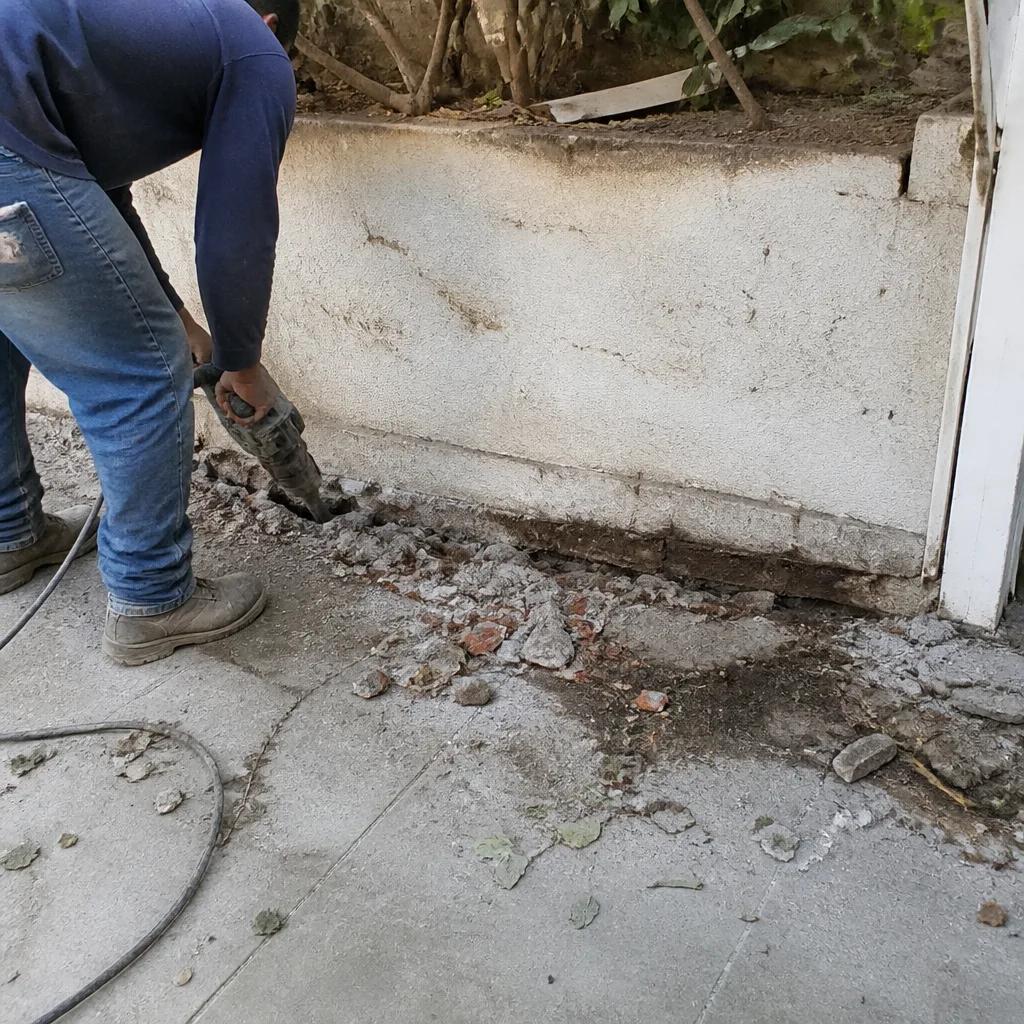 Before
 After
After Before
 After
AfterWhen to Call a Professional
Call a professional the moment the project touches structure, plumbing, electrical, gas, or anything behind a finished surface. That covers most kitchen and bathroom remodels, any wall removal, any window or door enlargement, any flooring over concrete slabs where moisture barriers matter, and any work that will be inspected by LADBS. If you’re unsure whether your project falls into that category, the phone call is free. Mason Remodeling offers free estimates in Los Angeles – call (803) 680-2547 and we’ll tell you honestly whether your project is DIY-appropriate or belongs in licensed hands. We’ve been serving Los Angeles homeowners since 2004, and part of that service is telling people when they don’t need us.
Frequently Asked Questions

Yes, California’s owner-builder exemption allows you to do your own construction work if you live in the home, the project is not for sale within one year, and the work stays under $500 in labor and materials. Structural, electrical, plumbing, gas, and mechanical work still requires a licensed contractor regardless of the owner-builder exemption. Call (803) 680-2547 for a free estimate if you’re unsure which category your project falls into.
Unpermitted work is discovered during the disclosure, inspection, or lender review process, and it typically costs the seller $10,000 to $40,000 in escrow credits, retroactive permit fees, or demolition and correction costs. Los Angeles buyers routinely negotiate hard on unpermitted square footage, and failing to disclose opens the seller to fraud claims after closing. A licensed contractor pulling permits from day one prevents this exposure entirely.
Permit fees in Los Angeles vary by project but typically range from $400 to $2,500 for a standard residential remodel that includes plumbing, electrical, and structural work. Retroactive permits for unpermitted work cost 2 to 3 times the original fee, plus any correction costs required to bring the work to current code. Call (803) 680-2547 for a written line-item quote that includes all permit fees.
In most Los Angeles policies, homeowner’s insurance does not cover injuries to people working on your home or damage caused by unlicensed construction. A licensed contractor carries general liability and workers’ compensation insurance that covers exactly these exposures, which is a core financial reason to hire a professional for any substantial renovation.
Painting, cabinet hardware, caulking, closet systems, and non-structural demolition are low-risk DIY tasks that work well alongside a licensed contractor managing the permitted scope. The split-scope approach saves money on labor without transferring permit and code liability to you. We write these splits into contracts in Los Angeles regularly, and they protect both parties.
Check the license number on the CSLB website, confirm workers’ compensation coverage, and ask for names and photos of every crew member before they arrive. The Threshold Standard at Mason Remodeling includes background checks, identity verification, a photo ID badge at the door, and a written introduction for every technician. If a contractor can’t tell you exactly who will be in your home, that’s the sign to keep looking.
The difference is often smaller than the line-item totals suggest once you account for your own time, tool costs, learning-curve waste, potential rework, and the future resale cost of mistakes. In our Los Angeles experience, a botched plumbing or electrical DIY job costs 3 to 10 times more to fix than it would have cost to do professionally the first time, especially when the failure happens inside a wall or under a slab. Call (803) 680-2547 for an exact quote on your project – estimates are free.
The Bottom Line
The DIY decision in Los Angeles is less about courage and more about code. California allows a homeowner to do more than most states, but it also exposes that homeowner to liability, insurance gaps, and resale consequences that most people never see coming. For cosmetic, low-risk, permit-free work, DIY makes sense and saves real money. For anything structural, electrical, plumbing, gas-related, or behind a finished wall, a licensed Los Angeles contractor is the financially responsible choice. The middle path works for many homeowners: handle the paint and the cabinet hardware, and let a contractor with a written price, named crew, and a 365-day guarantee manage everything the City of Los Angeles will inspect. Explore more guides & resources on making smart renovation decisions. That’s the balance that keeps your home, your sale price, and your peace of mind intact.
Written by Isaac Pruett, Owner at Mason Remodeling, serving Los Angeles since 2004.