


Top Signs You Need Construction Service – Don’t Ignore These
Most homeowners wait for the obvious: water pouring through the ceiling, a crack wide enough to fit a quarter, a floor that visibly slopes. By that point, the problem has been developing for a year or more. The signs you actually need to act on are quieter: a door that starts sticking in summer, a hairline crack that reappears after one patch, a musty smell in one corner after rain. If you’d rather have a professional look than spend a weekend investigating, call Mason Remodeling at (803) 680-2547 and we’ll walk you through what we’re seeing.
The Signals You’re Probably Dismissing

The diagonal crack above a door frame that homeowners blame on “settling” is often the first visible sign of foundation movement. By the time it appears, the movement has typically been progressing for 12 to 18 months. The cracks themselves aren’t the problem. They’re the late signal of something that started long before, often in ways that felt like no big deal at the time.
Here’s what we mean. In Los Angeles, soil expands when it rains and contracts during long dry stretches. This cycle, repeated over years, puts stress on a foundation in ways that don’t show themselves immediately. The first signs are almost never dramatic. A window that gets harder to open in August. A cabinet door that swings open on its own. A tile that sounds hollow when you tap it. Most people adjust to these slowly and forget they were ever different.
That’s the danger. Your home doesn’t suddenly break. It gives warnings for months before anything visible fails. The homeowners who catch problems early are the ones who notice when something changes from last season, not from last week.
Foundation: The Signs That Show Up Before the Crack
Foundation problems in Los Angeles rarely announce themselves with a dramatic split. The early signals are subtle and easy to attribute to something else entirely. Here’s what to look for before you ever see a wall crack:
- Doors that stick only in certain seasons. Wood swells with humidity, yes. But if a door was fine last summer and now rubs at the top corner, the frame may have shifted slightly. Not the door. The frame.
- Windows that won’t latch or unlatch cleanly. A window that worked fine for years and now requires two hands to close is telling you the opening is no longer square.
- Gaps at the top or bottom of baseboards. Baseboards don’t shrink. If you see a shadow line forming between the trim and the floor, the floor has moved. Slightly, but it has moved.
- Caulk that keeps splitting in the same spot. You re-caulk, it splits again within a year. That’s not a caulk failure. That’s two surfaces moving independently.
One thing we tell Los Angeles homeowners consistently: don’t patch a crack more than once. One patch is normal. If the crack returns, the movement is ongoing, and you’re standing at the moment the general contractor in Los Angeles visit costs a few hundred dollars instead of a few thousand.
Roof: What You Notice Inside Before You Ever Climb a Ladder
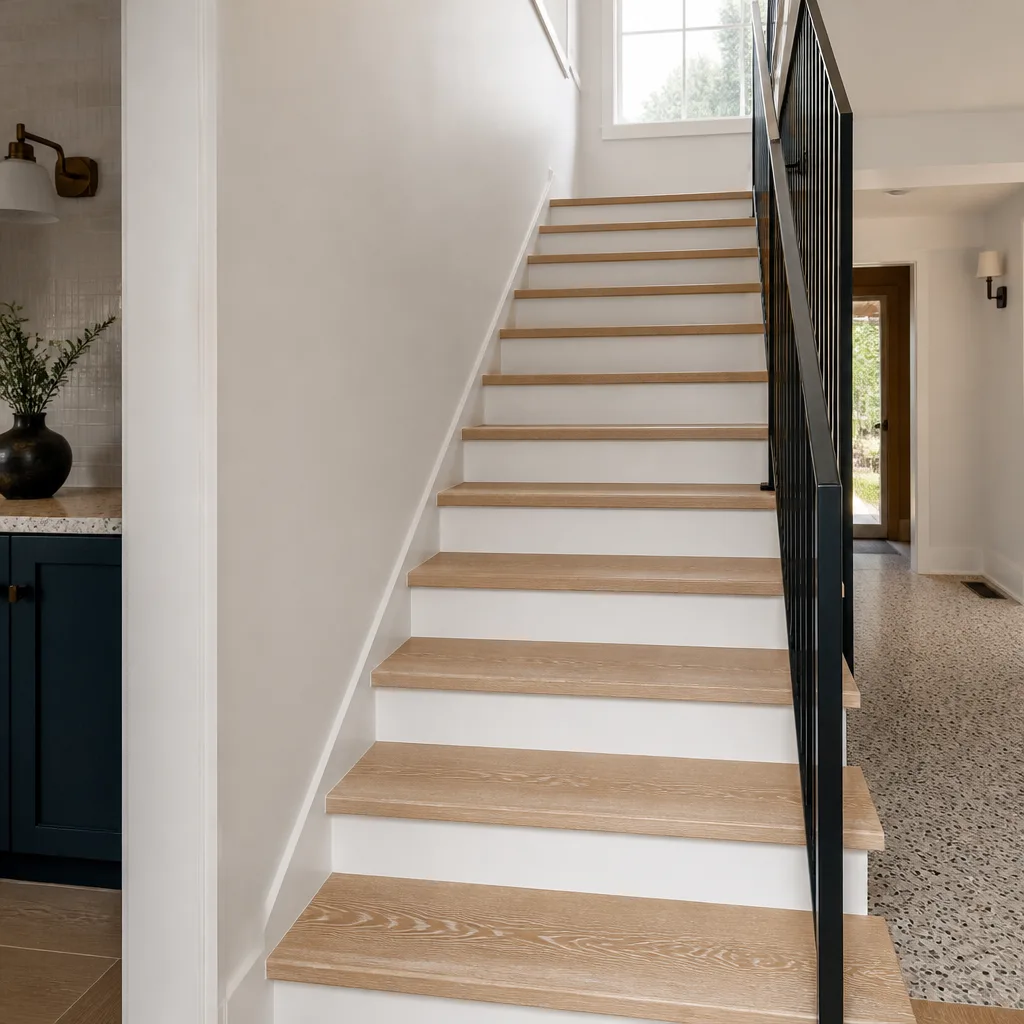
Nobody wants to get on their roof, and we don’t blame you. The good news is that the earliest roof warnings show up inside the house. Here’s what to watch for:
- Nail pops in drywall ceilings. A small circle pushing through the paint on a ceiling is often caused by truss uplift or slight roof deck movement. One or two is common. A cluster that appears within a season is not.
- Dark spots on ceiling insulation in the attic. If you store things up there, you’re up there enough to notice. Dark or water-stained spots on the insulation mean moisture is getting in. It doesn’t take standing water to cause this, just a small gap in flashing.
- Grit from shingles collecting at the bottom of downspouts. Asphalt shingles shed granules as they age. But if you’re seeing noticeable grit deposits after each rain while neighbors with newer roofs aren’t, your shingles are degrading faster.
- A musty smell in one specific room after rain. Smell is often the first detectable sign of a slow leak that hasn’t stained drywall yet. The water is entering, soaking insulation, and evaporating before it reaches visible surfaces.
We’ve specified roofing materials from Owens Corning and GAF on past projects precisely because these manufacturers engineer their shingles for the UV exposure and heat cycling that Los Angeles roofs take year after year. The wrong shingle on a hot, sunny roof deck degrades years early, and the first sign is often that grit you find at the downspout.
Plumbing: The Quiet Signals That Cost the Most
Plumbing problems are the most expensive of the early warnings because they hide the longest. A leak inside a wall can run for months before it shows on paint or flooring. Here’s what we tell homeowners to check for:
- A water bill that creeps up with no change in usage. Los Angeles water rates aren’t subtle. If your bill rises 10 to 15 percent without a new appliance or habit, a slow leak somewhere in the system is the most common explanation.
- The sound of water running when nothing is on. Late at night, when the house is quiet, stand near the wall where your main line enters. A faint hiss or rushing sound means water is moving when it shouldn’t be.
- Warm spots on the floor. In homes built on slab foundations, a hot water leak under the slab creates a warm patch you can feel through flooring. You’ll notice it in bare feet before you ever see a stain.
- Drains that gurgle when a toilet flushes or a washing machine drains. Gurgling means air is being pulled through the trap, which is often an early sign of a partially blocked vent stack or a drain line that’s starting to fail.
These are pre-visible warnings. Most homeowners don’t call until the stain appears on the ceiling below a bathroom, which by then has been leaking for weeks or months. The cost difference is significant: a $400 early intervention on a supply line fitting versus replacing drywall, insulation, flooring, and a section of pipe once water finally shows itself.
Electrical: How a Failure Announces Itself Quietly

Electrical problems are the one category where we don’t wait for the visible sign. The early signals are often sensory and inconsistent, and ignoring them puts more than your budget at risk. Any of these should get a licensed electrician or a general contractor involved:
- Lights that flicker or dim when an appliance kicks on. A microwave dimming the kitchen lights slightly is somewhat normal on older circuits. A washing machine causing a visible dip every cycle is not. That’s a sign of an undersized circuit or a failing connection.
- Outlets that are warm to the touch. An outlet should never be warm. Even a slight warmth means resistance somewhere in the connection, and resistance means heat building up inside your wall.
- A breaker that trips more than twice in a year. Once is a fluke. Twice is a pattern. Three times is a circuit that needs attention before the breaker itself fails or something overheats.
- A subtle burning smell you can’t locate. This one never waits. If you smell something hot or acrid anywhere near your panel, outlets, or a switch, call an electrician that day. Not next week.
Electrical work is one area where we’re direct with Los Angeles homeowners: this is not a DIY-friendly category. A loose connection inside a wall doesn’t just fail. It arcs. The repair is far less expensive than the alternative, and it’s always a licensed professional’s job.
The Cost Multiplier: What You Pay Now vs. What You Pay Later
The numbers are what we wish more people saw before they waited. We can’t give you a fixed price without looking at the job, but we can show the shape of the decision:
- Drywall hairline crack re-taped and textured: $300 – $600 now. The same crack after the underlying framing movement goes unaddressed for two more years: a structural repair plus drywall that runs $4,000 – $9,000.
- One pipe fitting replaced at the first sign of moisture: $250 – $500 now. The same pipe once it has damaged drywall, flooring, and a section of cabinet: $3,500 – $8,000 depending on what got wet.
- Flashing repaired around a roof penetration at the first sign of attic staining: $400 – $900 now. The same leak after it has rotted a section of roof decking: $5,000 – $12,000 with structural repair included.
The pattern is consistent: the first intervention is almost always under $1,000. The same problem a year later is rarely under $3,000 and often approaches $10,000. The quiet signs aren’t a warning about inconvenience. They’re a warning about a decision point that closes.
Document Before You Call: What to Photograph and Share
When you call a contractor, the first conversation sets the tone. If you can describe what you’re seeing with a photo attached, the initial assessment is faster and more accurate. Here’s what we ask for on the phone:
- Date-stamped photos of any cracks, stains, or gaps. Your phone does this automatically. The date matters because we want to know if a crack is new or has been there for years.
- Distance and close-up shots. One wide shot to show the location in the room, one close shot to show the texture and edges. Both matter.
- A photo of the door or window that’s sticking from all four corners. This shows us whether the gap is consistent or if the opening has shifted diagonally.
- Your last three water bills, if plumbing is the concern. The trend tells us more than any single number.
This documentation approach is one reason we deliver a written price before any work starts on every project. When we can see the issue before we arrive, we’re not guessing when we quote. We’re measuring. And you get a real number, not a verbal estimate that grows on the final bill.
When It’s Us – and When It’s Another Specialist
General contractors handle a lot, but we’re not the right call for every structural warning. Here’s the honest division, and we’ll always tell you this on the phone if it’s not our job:
- General contractor: wall cracks, door sticking, window alignment, drywall repair, framing repair, and most plumbing and electrical repairs that don’t require specialized engineering.
- Structural engineer: when foundation movement is significant enough that a repair plan needs stamped drawings. If a crack is wider than a quarter-inch or you can see displacement between two surfaces, we may recommend an engineer before we touch anything.
- Geotechnical firm: when the soil itself is the issue, such as significant hillside movement or erosion. Los Angeles hillside homes sometimes need this level of assessment, and we’d rather tell you that early than start work that doesn’t address the cause.
We’ve pulled one out of a garage over in Silver Lake last year where the homeowner had patched the same drywall crack three times. The fourth time, he called us. The underlying issue was a sagging header over the garage door, and the fix cost him a third of what it would have if he’d waited until the crack opened up wide enough to see daylight through. That’s the real difference: catching it when the warning is quiet, not when it’s loud.
The Bottom Line
The signs you need construction service aren’t always the dramatic ones. They’re the door that sticks in summer, the warm outlet, the water bill that creeps up, the crack that comes back after you patch it. These are the warnings your home gives while the fix is still measured in hundreds, not thousands.
If you’re in Los Angeles and you’ve noticed any of these signs, don’t wait for the visible damage. Mason Remodeling has been serving the area, and we’ve seen every early warning there is. We’ll give you a written price before any work starts, and every crew member who arrives at your door is background-checked, identity-verified, and introduced to you by name and photo before the visit. Call (803) 680-2547 and we’ll talk through what you’re seeing. The estimate is free, and we’ll tell you honestly if it’s not time to act yet.
Frequently Asked Questions
A wall crack is worth a professional look if it’s wider than a hairline, runs diagonally from a door or window corner, or reappears after you’ve patched it once. In Los Angeles, diagonal cracks above door frames are especially common in older homes and often indicate foundation movement that’s been progressing slowly for over a year. If the crack is wider than a quarter-inch or you can see displacement between the two sides, call a general contractor or structural engineer before patching again.
Call (803) 680-2547 for a free assessment if you’re unsure.
Minor foundation repairs in the Los Angeles area typically run between $500 and $4,000, depending on whether the issue is localized settlement or requires more extensive underpinning. A hairline crack that’s caught early and only needs surface repair is at the low end. Once structural movement is significant enough to require a contractor to install piers or do slab jacking, the cost can run from $10,000 to $30,000. That’s why early detection matters so much.
Call (803) 680-2547 and we’ll give you a written quote before any work begins.
Call a general contractor first if you’re seeing hairline cracks, sticking doors, or minor water stains. A contractor can assess the issue and tell you whether it’s repairable without engineering. If the damage is significant, like a crack wider than a quarter-inch, visible displacement, or a shifting retaining wall, you’ll likely need a structural engineer to design the repair before any contractor should proceed. We’ll tell you honestly on the phone which route is right.
Call (803) 680-2547 for a straight answer on your specific situation.
Yes. Mason Remodeling has provided home remodeling in Los Angeles and bathroom remodeling in Los Angeles. Every project comes with a written price before work starts, a written guarantee on the completed work, and the Done Right Promise: if the work isn’t right within a year of completion, we make it right at no cost to you. The local pros are background-checked, identity-verified, and introduced by name and photo before they ever arrive.
Call (803) 680-2547 to schedule your free estimate.
Written by the team at Mason Remodeling.
Need Construction Help?
Call Mason Remodeling - licensed & insured, here with fast after-hours help in Los Angeles.
(803) 680-2547