
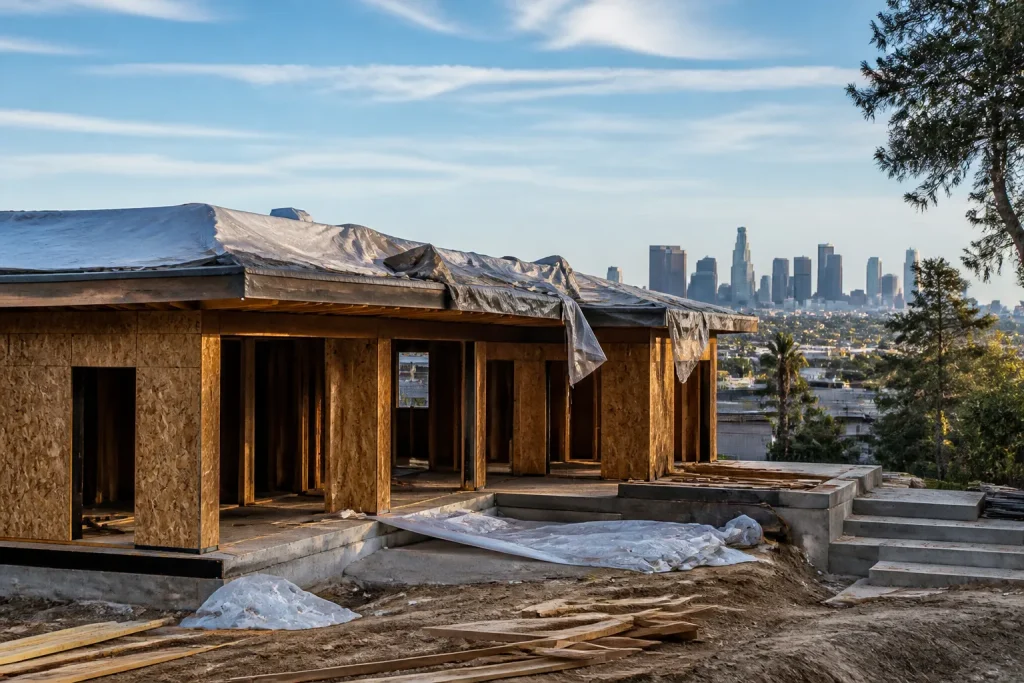
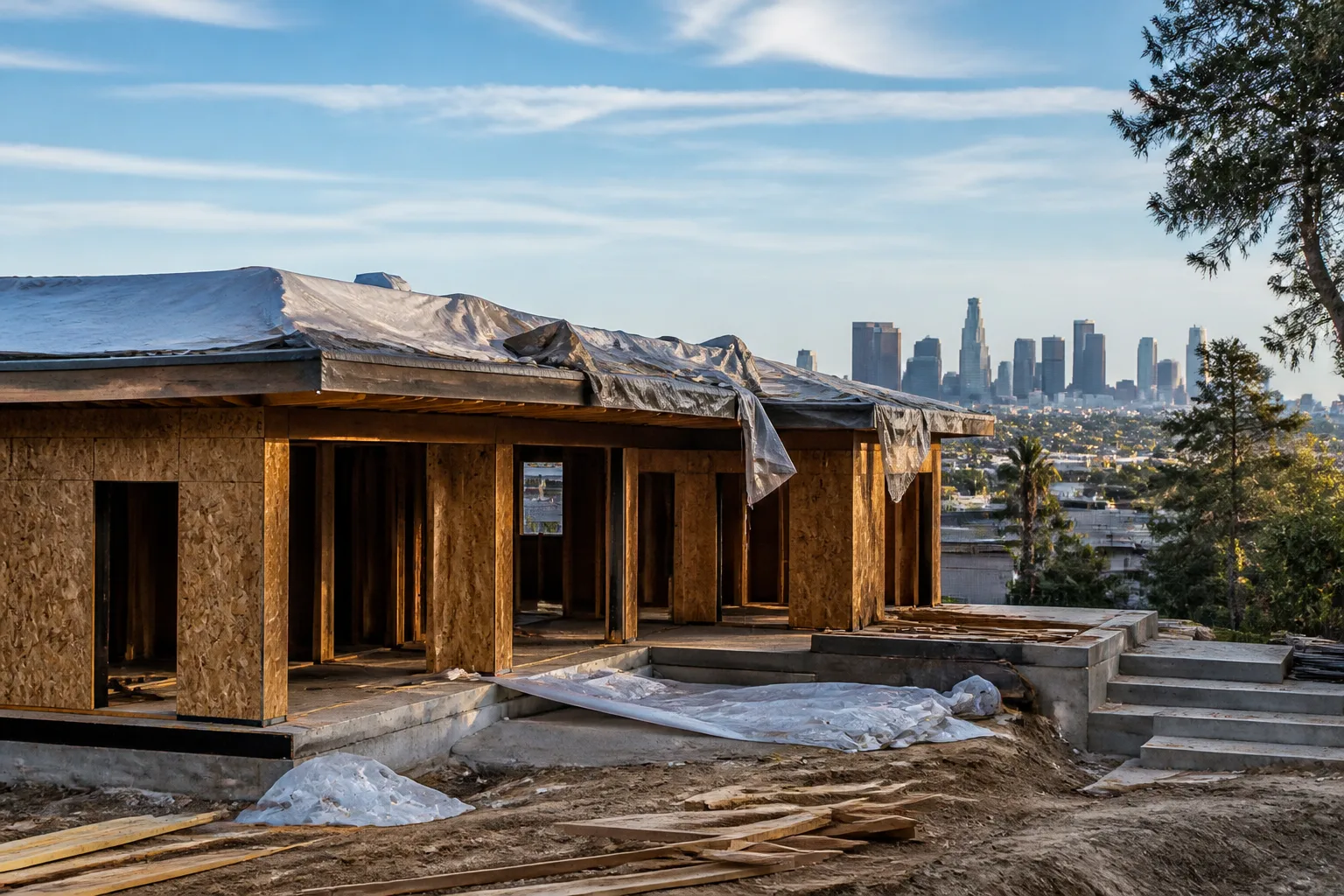
Preparing Your Home’s Construction for Winter in Los Angeles
Preparing your home’s construction for winter in Los Angeles means waterproofing open penetrations, scheduling pours and finishes around the region’s concentrated rain pattern, and extending cure times for materials like stucco and grout during cooler nights. Most LA homeowners skip winter prep because the season feels mild, but 80% of our annual rain falls between November and March, and it arrives in short, intense bursts that an unprotected job site can’t shed. If you’d rather not manage weatherproofing yourself, call (803) 680-2547 and we’ll walk you through what your project needs.
We’ve been building and remodeling in Los Angeles, and we’ve watched enough December downpours hit open framing to know that winter prep here isn’t optional. It’s just different from what people in cold climates assume.
Why Los Angeles Winter Weather Is Harder on Construction Than It Looks
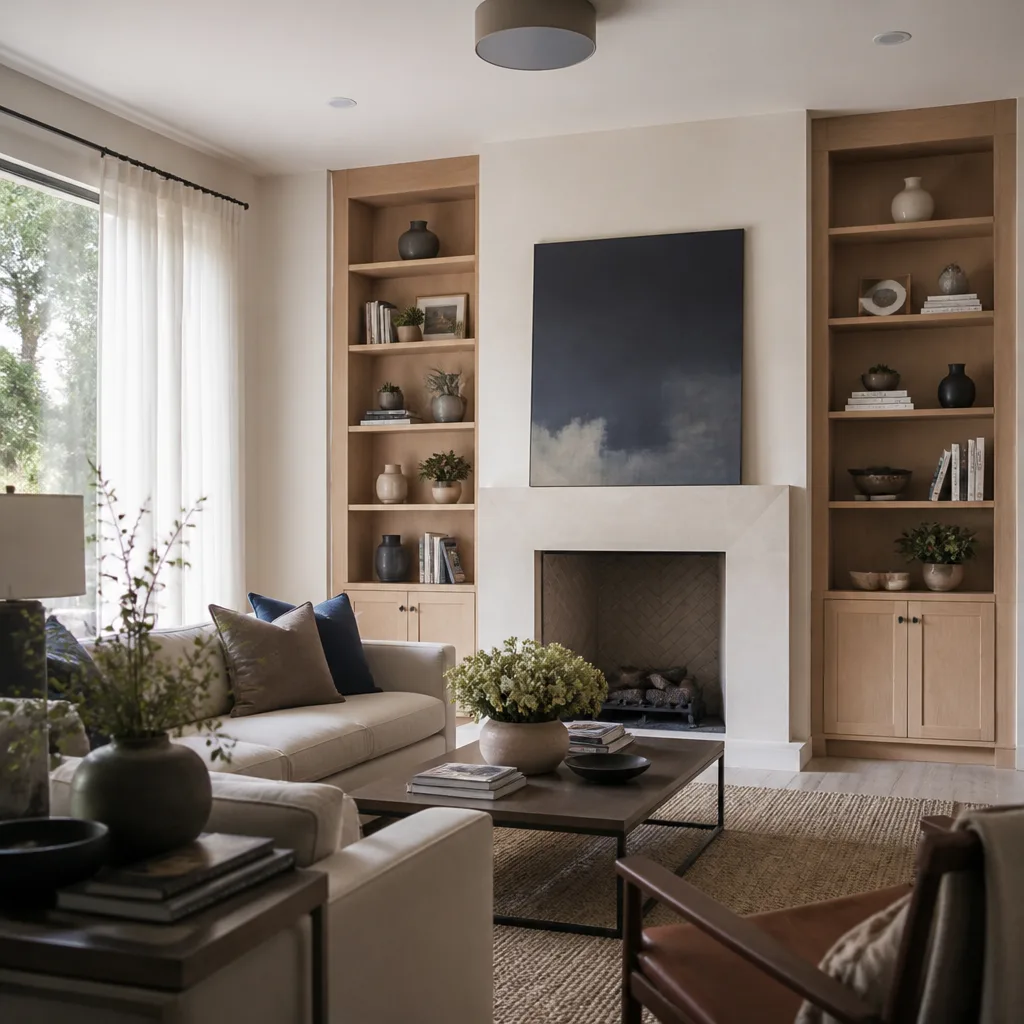
Los Angeles averages roughly 15 inches of rain per year. Chicago gets closer to 36. On paper, Los Angeles looks easy. The problem is the pattern. Nearly 80% of LA’s annual rainfall lands between November and March, and it often arrives as a few big atmospheric-river events rather than a steady drizzle spread across the season. A bathroom remodel with an open roof penetration in December faces more acute water risk than the same project in Chicago, because when it rains here, it rains hard, fast, and with nowhere to go on a saturated, hard-packed lot.
We’ve seen a single afternoon storm in the San Fernando Valley put more water through an unflashed dormer opening than a full month of light snowmelt would in the Midwest. The soil in much of Los Angeles also drains poorly once saturated, especially in hillside neighborhoods like Mount Washington or Baldwin Hills, where runoff channels through foundation excavations and pools against fresh footings. Winter construction prep in Los Angeles is really about managing short, violent rain events and long drying cycles between them.
The Construction Phases Most Vulnerable to LA’s Rain Pattern
Not every phase of a remodel carries the same winter risk. Some phases actually benefit from LA’s mild temperatures. Others get expensive fast if water finds its way in.
Open framing: Once roof sheathing is stripped or a wall is opened, the house is a sponge. We always require temporary dry-in, meaning tarps, peel-and-stick underlayment, or temporary roofing membrane before leaving any Los Angeles job site overnight between November and March. A responsible general contractor should have this in place before the first storm window, not after the NOAA forecast sends everyone scrambling.
Fresh stucco: Stucco needs specific moisture and temperature conditions to cure properly. In Los Angeles winter, nighttime temperatures regularly drop into the 40s, which slows the chemical reaction and leaves the surface soft longer. Rain on uncured stucco can cause staining, efflorescence, and weakened bond. We’ve had to redo stucco on a Pasadena addition because a February shower hit it three days after application.
Uncured concrete: Concrete pours in December and January cure slower than summer pours, which is actually a strength advantage for cracking resistance. But rain on fresh concrete before it reaches its initial set can ruin a slab. The local pros keep plastic sheeting and hay bales staged at every Los Angeles foundation pour during winter months.
Tile and grout: The thin-set mortar under tile needs time to dry before grout goes in. In LA’s winter humidity, that drying time can stretch from 24 hours to 48 or more, especially in enclosed bathrooms with limited airflow. Rushing this phase leads to loose tiles and cracked grout lines within the first year. We’ve also learned to keep a dehumidifier running on winter bathroom remodels in Los Angeles coastal neighborhoods like Playa del Rey, where marine air adds another layer of moisture.
How to Schedule Remodel Phases Around LA’s Actual Precipitation Calendar
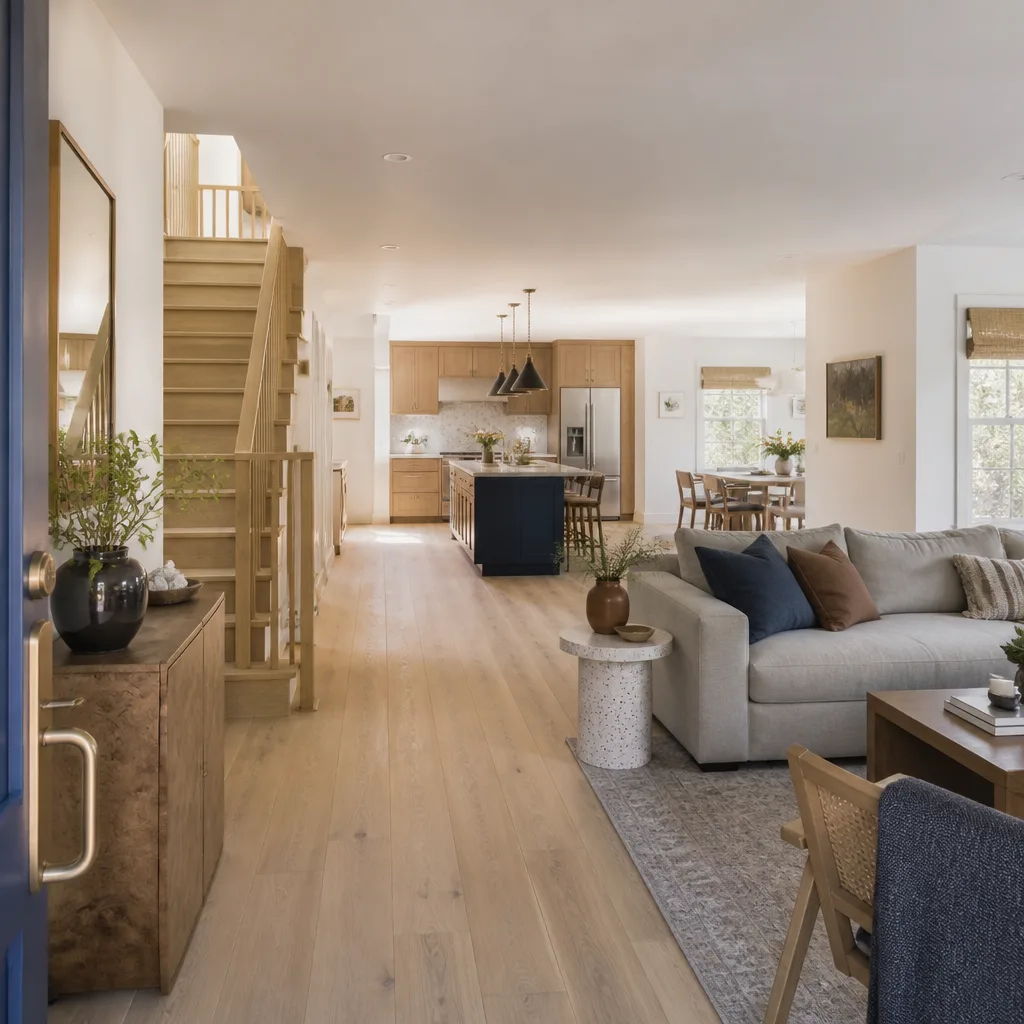
Los Angeles has two clear dry windows: roughly April through June and September through mid-November. The first rains usually arrive by Thanksgiving, and February is historically the wettest month. Smart scheduling works with this calendar instead of treating “rainy season” as one vague block.
Here’s how we sequence winter work on Los Angeles remodels:
- Roof work first: If your project involves roof penetrations, dormers, or re-roofing, get it done before the first week of November. A dried-in shell makes every other phase safer.
- Demolition and rough-in during dry weeks: Open walls and rough plumbing or electrical work are fine in winter as long as the project is dried in at the end of each day. We watch the 10-day forecast and plan demolition windows accordingly.
- Interior finish work during rainy stretches: Cabinetry, trim, painting, and fixture installation are indoor phases. Save them for weeks when rain is likely.
- Stucco and exterior paint in spring: These are the two materials most finicky about cold, wet conditions. In Los Angeles, that means pushing them to March or April unless winter stays unusually dry.
The permit office calendar matters too. Los Angeles Department of Building and Safety sees a backlog spike every spring when homeowners rush to start projects. Starting your remodel in winter means inspections get scheduled faster, plans get reviewed sooner, and your project isn’t stuck waiting for an overbooked inspector in May.
Temporary Weatherproofing: What a Responsible Los Angeles GC Should Have on Site
Before any storm window opens, a competent general contractor in Los Angeles should have specific protections staged and ready. If your GC shrugs and says the tarps are “in the truck,” that’s not a plan. That’s a prayer.
Here’s our winter weatherproofing checklist for active Los Angeles job sites:
- Tarps and plastic sheeting: Heavy-duty 6-mil poly minimum, with enough coverage for every vertical opening and exposed horizontal surface.
- Peel-and-stick underlayment: For roof penetrations and dormers, this self-adhering membrane is the difference between a small leak and a ceiling replacement. We use products from professional roofing lines like GAF for exactly this application.
- Sandbags and diversion channels: On sloped Los Angeles lots, especially in hillside areas like Echo Park or Silver Lake, runoff needs a path that doesn’t cut through your foundation excavation.
- Temporary downspout extensions: Direct water away from open trenches and fresh concrete. A $12 extension can save a $4,000 slab.
- Staged plywood covers: For window and door openings before installations are complete. We cut and label these in advance so they go up in minutes, not hours.
We also verify weatherproofing before leaving the site every day, not just when rain is in the forecast. Los Angeles storms can form quickly off the Pacific, and the 5 p.m. forecast sometimes misses what hits at 9 p.m. And that’s the real standard: a responsible contractor treats dry-in as a daily routine from November through March, not as an emergency response.
How Winter Affects Curing Times in Southern California’s Temperature Range

Los Angeles winter temperatures rarely drop below freezing, which is why we don’t winterize plumbing the way contractors do in Minnesota. But 45 to 55 degree nights meaningfully slow the cure cycle for several common materials. Homeowners should know what “slow” means in real numbers so they can plan move-in dates and finish schedules around reality.
Concrete: A summer slab in Los Angeles reaches initial set in about 4 hours. A December pour can take 8 to 12 hours, and full strength development stretches from 7 days toward 14 or more. We don’t frame on a winter foundation until it’s tested or clearly past a conservative cure window.
Stucco: Three-coat stucco needs about 48 to 72 hours per coat to dry in warm, dry conditions. In LA winter, that becomes 5 to 7 days per coat. Budget the extra time or risk a finish that cracks and stains within two years.
Thin-set mortar and grout: Tile work in an unheated Los Angeles bathroom during a January cold snap can demand 48 hours of dry time before grouting, versus 24 in August. The tiles look the same to a homeowner, but the bond underneath is the difference between a floor that lasts 20 years and one that starts popping within 18 months.
Paint and caulk: Exterior paint and sealants need surface temperatures usually above 50 degrees. Los Angeles winter mornings often sit in the low 40s until 9 or 10 a.m. We start exterior paint after the surface warms and stop early enough for it to flash off before the evening dew. Caulk applied to a cold, wet joint will fail, full stop.
None of these delays are disasters. They’re just physics. The contractors who ignore them are the ones leaving homeowners with callbacks inside the first year. The ones who plan for them finish jobs with fewer surprises.
The Inspection and Closeout Advantage of Starting Los Angeles Remodels in Winter
Here’s the part most winter-prep articles miss: scheduling a remodel during Los Angeles’s wet season has real administrative advantages, because so many homeowners are waiting for spring. Permit reviewers at LADBS have shorter queues in December and January than they do in April. Inspection scheduling is faster. Material lead times from suppliers are shorter because fewer projects are in flight.
We pulled a kitchen remodel permit in Los Angeles last December that took 9 days from submittal to approval. The same scope in April averaged closer to 3 weeks. That’s not a small difference when you’re paying carrying costs on a project or working around a lease end date.
The sensible strategy for Los Angeles homeowners is to start the administrative and structural phases of a remodel in winter, when the city is less backlogged, and time the finish work for the dry spring window. That sequencing lets you avoid both the water risk of open framing in the rain and the schedule risk of competing with every other remodel in the city come April.
If you’re weighing this trade-off against a specific project, a good General Contractor in Los Angeles can map your scope onto the calendar so you’re not guessing. We do this for every project we bid, and we’d rather spend 30 minutes on a phone call preventing a schedule problem than three weeks fixing one later.
When to Call a Pro
Some winter prep tasks are fine for a weekend. Sandbags, gutter checks, and clearing drains are all within reach. But if your project has exposed framing, an open roof penetration, or uncured concrete with rain in the forecast, that’s the moment to call a professional. Water damage from one Los Angeles storm can exceed the cost of the original waterproofing work ten times over. And while tarps and plastic look simple from the driveway, a failed temp roof at midnight is a different conversation than a failed one at noon.
We’ve pulled jobs back from the edge more times than we can count. One year we got a call from a homeowner in Atwater Village whose previous contractor had left a flat-roof opening covered with a blue tarp and a prayer. February came, the tarp failed, and the water took out half the kitchen ceiling. The repair cost more than the original roofing scope. A proper peel-and-stick membrane would have prevented every inch of it.
If you’re in the middle of a Bathroom Remodeling in Los Angeles or a Home Remodeling in Los Angeles and the forecast turns, we’re here. One call, and a real person answers. We’ll tell you honestly whether you need a crew today or whether simple staging will hold through the next cell.
The Bottom Line
Winter construction prep in Los Angeles comes down to five things: dry in every opening before November, schedule outdoor pours and finishes around the actual rain calendar, extend cure times for stucco and tile in cool weather, stage real weatherproofing materials before storms form, and use the winter permit backlog slowdown to your advantage. The season isn’t harsh here the way it is in Chicago or Boston, but the rain that does come hits hard and finds every gap.
If you’re planning a remodel in Los Angeles and want a written price and a schedule that accounts for the actual weather, Mason Remodeling home is the place to start. We’ve been doing this here, and every project gets a written price before any work starts, plus our Done Right Promise on top of that. Call (803) 680-2547 for a free estimate. No pressure, no vague verbal numbers. Just a real plan.
Frequently Asked Questions
Yes. Concrete pours in Los Angeles winter are actually less prone to cracking because the slower cure reduces thermal stress. The main risk is rain hitting the pour before it sets. Cover fresh pours with plastic sheeting during any rain window, and expect longer set times, roughly 8 to 12 hours for initial set versus 4 hours in summer. Call (803) 680-2547 if you’re planning a winter foundation or slab and want the full sequencing.
Each coat of three-coat stucco needs about 5 to 7 days to dry in LA winter conditions, compared to 2 to 3 days in warm summer weather. Nighttime temperatures in the 40s and higher humidity slow the cure cycle. Protect fresh stucco from rain for at least the first several days of the cure window, and don’t let a contractor rush the finish just to close out a job. Plan this phase for your schedule and budget accordingly.
A responsible contractor should have heavy-duty tarps, peel-and-stick underlayment, sandbags, temporary downspout extensions, and pre-cut plywood covers staged on site from November through March. Dry-in protection should be installed daily before the crew leaves, not only when rain is forecast. If your contractor can’t describe their specific dry-in protocol, that’s a red flag worth a conversation before the next storm.
Yes. LADBS plan review and inspection queues shrink noticeably in December and January because fewer projects are in flight. We’ve seen residential permits come back in under 10 days during winter versus 3 weeks or more in spring. Winter starts also let you finish the structural phase during the slow season and schedule paint, stucco, and exterior work for the dry spring window when materials cure fastest.
Written by the team at Mason Remodeling.
Need Construction Help?
Call Mason Remodeling - licensed & insured, here with fast after-hours help in Los Angeles.
(803) 680-2547