Last updated October 9, 2026






Free written scope consultation - allowances, timeline, and change-order rules on paper before a single trade is scheduled
Construction Warning Signs: A Los Angeles Homeowner’s Reference Guide
Diagonal cracks running from the corners of door frames in an LA home aren’t cosmetic. In a city where foundation movement from expansive clay soil is routine, they’re often the first readable sign of active differential settlement. Most construction warning signs aren’t dramatic collapses or visible disasters. They’re quiet, incremental signals that something was built wrong or is failing slowly, and Los Angeles’s specific geology and climate create a distinct set of failure patterns that homeowners here need to recognize, not generic advice that applies everywhere. This guide covers what actually goes wrong in Los Angeles homes: which cracks matter, what moisture does to stucco and block, how to spot an unpermitted remodel, and what red flags in contractor behavior look like before they become liens.
Quick Answer
Construction warning signs in Los Angeles homes typically fall into five categories: structural cracks that follow diagonal or stair-step patterns, moisture damage showing as efflorescence or stucco blistering, unpermitted work identifiable by mismatched materials and out-of-level surfaces, hillside-specific drainage and retaining wall failures, and contractor behaviors that signal project risk. Most signs are readable by a homeowner with a flashlight and a level, but interpreting them correctly, especially hillside foundation movement, usually warrants a professional evaluation-our DIY vs Professional Construction: The Los Angeles Homeowner’s Decision Guide can help you decide when to call one in.
Styles & brands we work with





Table of Contents
- Reading Cracks: Normal Settling vs. Active Movement in Los Angeles
- Hillside Warning Signs: Retaining Walls, Post-and-Pier, Drainage
- How to Spot an Unpermitted Remodel in Los Angeles
- Moisture Warning Signs Specific to LA Construction Methods
- Contractor Behavior Red Flags and California Legal Options
- Material Warning Signs: What Failing Products Look Like
- Drainage and Grading: The Overlooked Warning System
- Foundation Warning Signs: When to Act Fast
Reading Cracks: Normal Settling vs. Active Movement in Los Angeles
Los Angeles sits on some of the most geologically restless soil in the country. The region’s expansive clay, which swells when wet and shrinks when dry, cycles through dramatic volume changes every wet season and dry season. That means every LA home will crack somewhere eventually. The skill is knowing which cracks are cosmetic and which ones are telling you the structure is moving.
Here’s how to read them:
- Hairline vertical cracks in drywall, under 1/16 inch wide and running straight up from a corner or along a seam, are almost always normal. Drywall expands and contracts with humidity. Los Angeles’s summer-to-winter humidity swings are enough to cause this without any structural involvement.
- Diagonal cracks from door or window corners are the ones to take seriously. When a crack runs at roughly 45 degrees from the top corner of a door frame, it means the frame is being twisted. That happens when one side of the opening is settling faster than the other. In Los Angeles, we see this most often in homes built on fill soil, especially in the Valley where entire tracts were graded over old agricultural land.
- Stair-step cracks in stucco or block follow mortar joints in a staircase pattern. On a stucco exterior wall, this means the underlying framing or masonry is shifting. On a concrete block retaining wall or foundation stem wall, a stair-step crack wider than 1/8 inch is active movement, not settling.
- Horizontal cracks in foundation walls are the most serious. Vertical pressure from soil against a foundation wall should not cause horizontal cracking. When it does, the wall is bowing inward under lateral load. In hillside Los Angeles neighborhoods like Mount Washington or Echo Park, this is a known failure pattern on older retaining and foundation walls.
One Los Angeles-specific tell: cracks that open and close seasonally. If a crack widens in late summer and closes after winter rains, the home is riding on expansive clay that is actively responding to moisture. The movement may be within tolerance, but it’s worth monitoring with a simple pencil mark and date.
Hillside Warning Signs: Retaining Walls, Post-and-Pier, Drainage
Roughly a third of single-family homes in Los Angeles sit on hillside or canyon lots, and these homes have a completely different failure profile than flat-lot construction. A flat-lot home in the Valley deals with expansive clay. A hillside home in Silver Lake or Baldwin Hills deals with gravity, hydrostatic pressure, and drainage systems that are often older than the current building code.
Our team at Mason Remodeling has spent two decades working on enough Los Angeles hillside homes to know that these are the warning signs that matter most:
- Leaning or bulging retaining walls. A retaining wall that has moved even 2 inches out of plumb is under more lateral load than it was designed for. Look for fresh cracks at the top of the wall, soil separation where the wall meets the hillside, and water staining on the wall face after rain. These three together mean the wall’s drainage system has failed and hydrostatic pressure is building behind it.
- Post-and-pier foundation movement. Many hillside homes in Los Angeles built before 1960 sit on post-and-pier foundations, not concrete slabs. The warning signs are doors that stick seasonally, floors that slope noticeably toward the downhill side, and posts that are no longer centered on their piers. In crawl spaces, look for posts that have shifted off their bearing plates or piers that have tilted.
- Surface drainage that flows toward the house. On a hillside, water is always moving downhill. If gutters discharge against the uphill side of the foundation, or if a neighbor’s grading sends runoff across your lot, that water is finding its way into your soil, your foundation, and potentially your crawl space. We see seasonal retaining wall failures in Los Angeles every winter that trace directly back to a neighbor’s drainage change made years earlier.
The hillside-specific advice is simply this: on flat lots, water problems show up slowly. On hillside lots, they show up suddenly. A hillside drainage issue that has been ignored for three dry years can become a retaining wall failure in one wet winter.
How to Spot an Unpermitted Remodel in Los Angeles
Los Angeles has one of the most active DIY vs Professional Bathroom Remodeling: What’s Safe to Do Yourself and unpermitted construction markets in the country. The city’s Department of Building and Safety processes over 100,000 permit applications annually, but a significant amount of work is still done without them. For a buyer or a current owner, unpermitted work creates real risk: insurance claims can be denied, refinancing can stall, and the city can require you to open walls to prove the work meets code.
Here are the signs that a previous remodel in an LA home was done without permits:
- Materials that don’t match the home’s era. A 1940s Spanish-style home in Mid-City with a kitchen full of 2015-era materials but no building history on the city’s permit portal. The materials tell the truth: work happened, and it’s not in the record. Look up the address on the LA Department of Building and Safety’s online permit database and compare what’s listed against what you see.
- Out-of-level counters, floors, or tile lines. Unpermitted work often skips the framing and leveling steps that a permitted inspection would catch. Place a 4-foot level across a kitchen counter. If the bubble is pinned to one side, the substrate wasn’t leveled before the finish went on. This is construction that cut corners, and it’s usually a sign more corners were cut behind the walls.
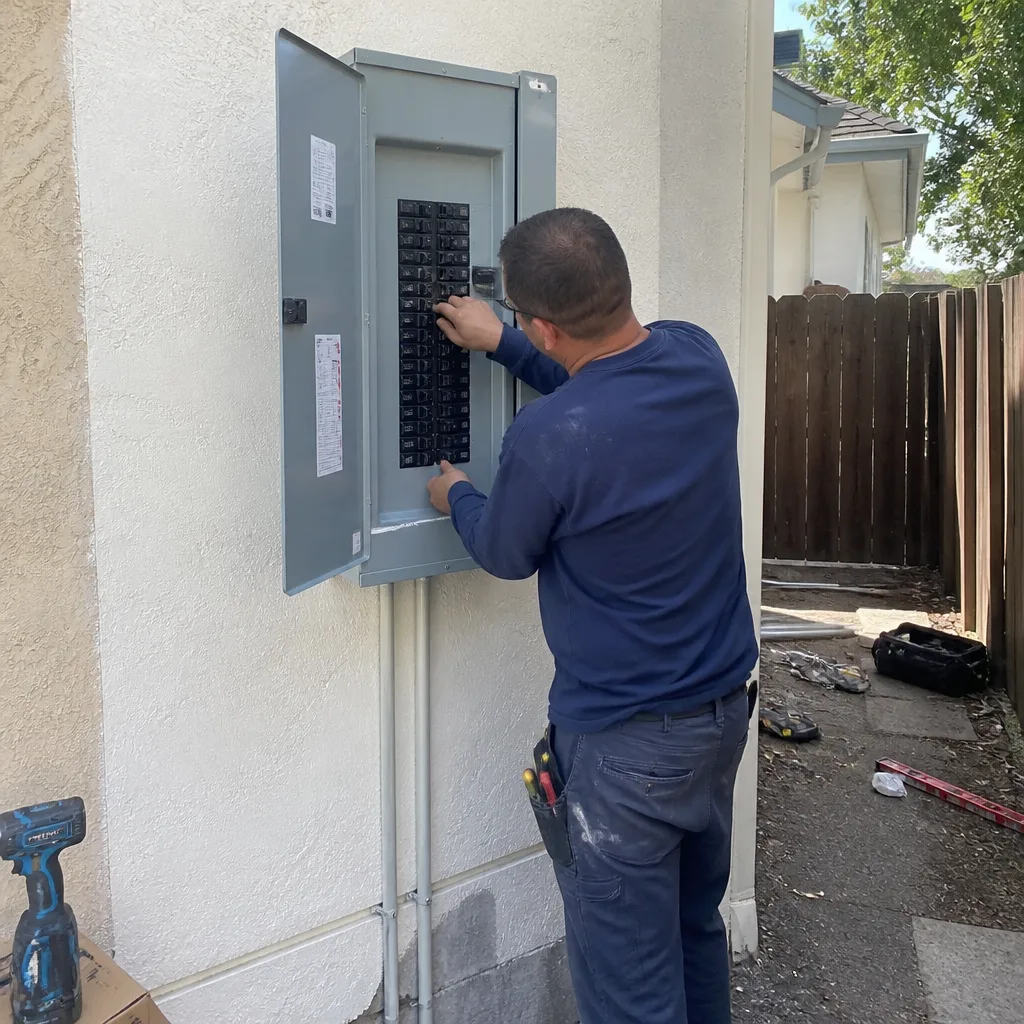
- Electrical or plumbing that doesn’t match the era of the house. A 1950s ranch in the San Fernando Valley with a 200-amp panel and modern PEX plumbing but no permit history for a panel upgrade or repipe. Someone did the work. They just didn’t tell the city. This matters because unpermitted electrical work is one of the top causes of home fires in older LA housing stock.
- Rooms that don’t exist in the assessor’s records. A finished garage, an added sunroom, or a converted basement that doesn’t appear on the county assessor’s square footage record. This is an unpermitted addition, and it can be costly: the city can assess back taxes, and insurance companies can deny whole-home coverage if they discover unpermitted square footage after a claim.
- Stucco patches with different texture or color. Unpermitted work often includes wall relocations or exterior penetrations. When the stucco is patched, the texture rarely matches exactly. Look for rectangular patches with different trowel marks. Each one is a sign of a wall that moved or an opening that changed.
If you discover unpermitted work, don’t panic. The city has a process for as-built permits and retroactive compliance. But do get it evaluated before you sell, refinance, or renovate further.
Moisture Warning Signs Specific to LA Construction Methods
Los Angeles is technically a semi-arid climate, which means many of the moisture problems that plague other cities show up differently here. We don’t get the sustained humidity that rots framing in Houston or the freeze-thaw cycles that split masonry in Chicago. What we do get is seasonal downpours against construction methods, stucco and concrete block, that were designed for a drier California that no longer exists.
Three moisture warning signs specific to LA:
- Efflorescence on block walls. Efflorescence is the white, powdery mineral deposit that appears on concrete block, brick, or stucco surfaces. It happens when water moves through masonry, dissolves salts, and deposits them on the surface as the water evaporates. On a block retaining wall or foundation stem wall in Los Angeles, efflorescence means water is moving through the wall, not just wetting the surface. Over time, this weakens the mortar and erodes the wall from the inside. It’s especially common on hillside block walls in neighborhoods like Highland Park and Atwater Village, where older walls were built without proper weep holes.
- Stucco blistering or bubbling. Stucco that has trapped moisture underneath will eventually bubble or blister, creating small rounded protrusions that flake when touched. This is different from surface staining. Blistering means water is trapped between the stucco and the substrate, and the fix requires removing the damaged area, not just repainting. In Los Angeles, we see this most often on east-facing walls in canyon neighborhoods where airborne moisture and shade combine to keep stucco damp for long stretches.
- Subfloor bounce. In crawl space homes, which are common in the beach cities and older neighborhoods of Los Angeles, a floor that bounces or flexes when you walk across it is often a moisture problem, not a framing problem. Moisture from the crawl space, whether from a plumbing leak, poor ventilation, or groundwater migration, softens plywood subfloor and weakens joist connections over time. A floor that feels springy in one room but solid in the next is a moisture warning sign worth investigating from below.
None of these issues repair themselves. Moisture problems in Los Angeles construction are progressive: what starts as efflorescence becomes mortar failure, what starts as a stucco blister becomes framing rot. The earlier they’re caught, the less invasive the fix.
Contractor Behavior Red Flags and California Legal Options
Construction warning signs aren’t only found in the building. Some of the most expensive warning signs are behavioral, and they show up before the first tool is unpacked or within the first weeks of a project. A homeowner in Los Angeles who can read contractor red flags early saves more money than any structural inspection ever will.
Red flags that show up before the contract:
- No license number offered proactively. In California, any contractor performing work over $500 in labor and materials must hold a valid California Contractors State License Board (CSLB) license. A contractor who doesn’t volunteer their license number, or whose license number doesn’t match their business name, is a warning sign. Verify every license at cslb.ca.gov before signing anything.
- No written, itemized price before work starts. Verbal estimates that grow on the final bill are one of the most common contractor complaints filed with the CSLB. A detailed, written price before any work begins is not a courtesy; it’s the baseline standard for professional work. If a contractor won’t put it in writing, keep looking.
- Payment demanded upfront beyond the legal deposit. California law caps the initial down payment for a home improvement contract at 10% of the total project price or $1,000, whichever is less. Any contractor asking for more than that before work starts is already violating state law.
Red flags that show up mid-project:
- Inconsistent crew members without identification. Homeowners deserve to know who is entering their home. A professional operation verifies every crew member’s identity and background, and the homeowner should know a technician’s name before they arrive. Unknown, rotating workers with no identification is a warning sign about who is actually on the property.
- Change orders without written approval. Mid-project changes are normal. What’s not normal is a contractor who makes changes verbally and bills for them later. Every change order in California should be in writing, signed by both parties, with the cost adjustment stated before the work is done.
If a project goes sideways in California, the homeowner’s legal options include filing a complaint with the CSLB, filing a claim against the contractor’s license bond (which every licensed contractor must carry), pursuing mediation or arbitration if the contract requires it, and as a final step, litigation. The CSLB complaint process is free and can result in license suspension or revocation, which is significant leverage. But the best protection is to avoid the red-flag contractor entirely by verifying the license, the written price, and the crew before any work starts. Our team at Mason Remodeling operates under the Threshold Standard, which means every technician is background-checked, identity-verified, arrives in a clean marked uniform, and is introduced to the homeowner by name and photo before the visit. You always know who is at your door.
Material Warning Signs: What Failing Products Look Like
Not all construction warning signs point to structural problems. Some point to material failure, and Los Angeles’s combination of intense UV exposure, salt air near the coast, and seismic movement creates specific failure patterns that a homeowner can learn to recognize early.
Roofing materials on Los Angeles homes, for example, degrade in predictable ways. Asphalt shingles from brands like GAF or CertainTeed are engineered for durability, but LA’s UV exposure is relentless. The warning signs are granule loss (visible as bare patches where the asphalt base shows through), curling edges on south-facing planes, and cracking. Shingles that look dry and brittle in year 12 of their lifespan are signaling the end is near, and in LA’s hot summers, that end arrives faster than in coastal Northern California.
On exterior hardscape and masonry, look for spalling, the flaking or chipping of concrete or stone surfaces. Spalling on a concrete driveway or walkway is often cosmetic in its early stages, but spalling on structural elements like foundation piers, retaining walls, or balcony supports is a material failure with structural implications. On older Los Angeles homes with unreinforced masonry, spalling brick on chimneys or foundation walls is a known earthquake vulnerability, and it should be evaluated by a structural engineer before the next significant seismic event.
Interior material warning signs include tile that sounds hollow when tapped, which means the thinset bond has failed or was never properly applied, and grout that crumbles or cracks in consistent patterns, which often indicates subfloor or underlayment movement beneath the tile. In bathrooms, a soft spot in the subfloor around a toilet or tub is a moisture and material failure warning sign, not just an aesthetic issue. Materials fail when they’re improperly installed, incorrectly specified, or past their useful life. Knowing which of these three causes is at work tells you how urgent the repair is.
Drainage and Grading: The Overlooked Warning System
Of every construction warning sign in Los Angeles, drainage and grading problems are the most commonly ignored, because they show up in small ways that don’t look like construction failure at all. A damp spot on a stucco wall. A puddle that lingers after rain. A ring of dark soil at the base of a foundation wall. These read as maintenance issues. Over a decade, they’re structural issues.
The most common drainage warning sign in Los Angeles is soil that slopes toward the house. Flat lots in the Valley and the Westside were often graded with inadequate positive slope away from the foundation. The fix is regrading to achieve a 5% slope away from the structure for at least 5 feet, with compacted soil that won’t settle back into a negative slope. Where regrading isn’t possible, swales, catch basins, and French drains are the standard solutions.
A second warning sign, specific to homes with clay soil, is the seasonal gap between foundation and soil. During LA’s dry months, expansive clay shrinks, pulling away from the foundation and leaving a visible gap. During wet months, the clay swells, pressing back against the foundation. This cycle is why Los Angeles homes develop seasonal cracks and sticky doors. The issue isn’t fixable with a drainage change alone; it’s a soil condition that requires foundation evaluation and sometimes underpinning or pier installation.
A third sign is gutter discharge too close to the foundation. Downspouts that terminate within 3 feet of the house are dumping concentrated roof water directly onto the soil at the foundation line. Extending downspouts 5 to 10 feet away, or connecting them to a drainage system, is one of the cheapest and highest-impact fixes in Los Angeles construction. We’ve watched thousands of dollars in future foundation damage get prevented with a $50 downspout extension and a properly sloped splash block.
Foundation Warning Signs: When to Act Fast
Most construction warning signs in Los Angeles are slow burners. Foundation warning signs are the exception. When a foundation is actively moving, the timeline changes from “monitor and plan” to “evaluate and act” because the cost multiplies as movement continues.
The warning signs that demand fast action:
- Cracks wider than 1/4 inch in any foundation element, interior or exterior. A crack this wide is beyond cosmetic settling and indicates differential movement between foundation sections.
- Cracks that have grown within a 12-month period. Active movement is different from historical settling. Measure and photograph cracks monthly. If the width or length changes, you have an active foundation movement problem.
- Doors or windows that jam and won’t stay latched. When a door that used to close cleanly begins sticking or won’t latch, the rough opening has shifted. On post-and-pier foundations, this is often the first visible sign of pier settlement.
- Floors that slope visibly. A floor that slopes more than 1 inch over 15 feet is outside normal construction tolerance and indicates structural settlement. In Los Angeles hillside homes, this often traces back to failing piers or drainage-related soil movement.
- Separation at wall-to-ceiling junctions or where interior walls meet exterior walls. These are signs the home’s frame is twisting under uneven loads.
If you spot any of these, the next call is to a foundation specialist or structural engineer, not a general handyman. Foundation repair in Los Angeles, whether it’s pier installation, underpinning, or drainage correction, requires permits and engineering. It’s not a DIY vs Professional General Contractor: What’s Safe to Do Yourself situation, and it’s not a project to delay. The 365-Day Done Right Promise that Mason Remodeling applies to its work exists because building science, not guesswork, is what protects a Los Angeles home. Foundation issues are the same: evaluated correctly, repaired properly, and documented.
Common Mistakes to Avoid
- Painting over cracks and assuming the problem is fixed. Paint hides the visual, not the cause. A crack that’s painted over and reappears within a year is a movement signal, and every paint cycle just delays the real evaluation. In Los Angeles, seasonal clay movement means cracks that keep coming back need structural assessment, not more patching.
- Ignoring drainage because “it hardly rains in LA.” The problem with that logic is that when it does rain in Los Angeles, it rains hard and fast. An atmospheric river delivers more water to a foundation in 48 hours than a year of ordinary rainfall. Drainage problems compound in the dry years and fail catastrophically in the wet ones.
- Assuming a hillside home’s retaining wall is someone else’s problem. If the wall is on your property, it’s your problem, even if the uphill neighbor’s water is what’s flowing over it. Waiting for a neighbor to fix drainage means waiting through another winter’s worth of hydrostatic pressure against your wall.
- Buying a home with unpermitted work without investigating. Unpermitted work that’s discovered after purchase becomes the new owner’s liability. The cost to bring it into compliance, or the discount in a future sale, is a real number that should be negotiated before closing, not discovered after.
- Hiring the cheapest bid without verifying license and insurance. The lowest bid in Los Angeles construction too often belongs to an unlicensed operator with no bond and no insurance. If a worker is injured on your property, that liability falls on you. Verify every license and bond before signing.
- Waiting to fix drainage until after the foundation moves. Drainage correction is a fraction of the cost of foundation repair. By the time a foundation shows visible movement, the drainage problem has been doing damage for years. Fix drainage first, monitor the foundation, and act if the movement continues.
See the difference
 Before
 After
After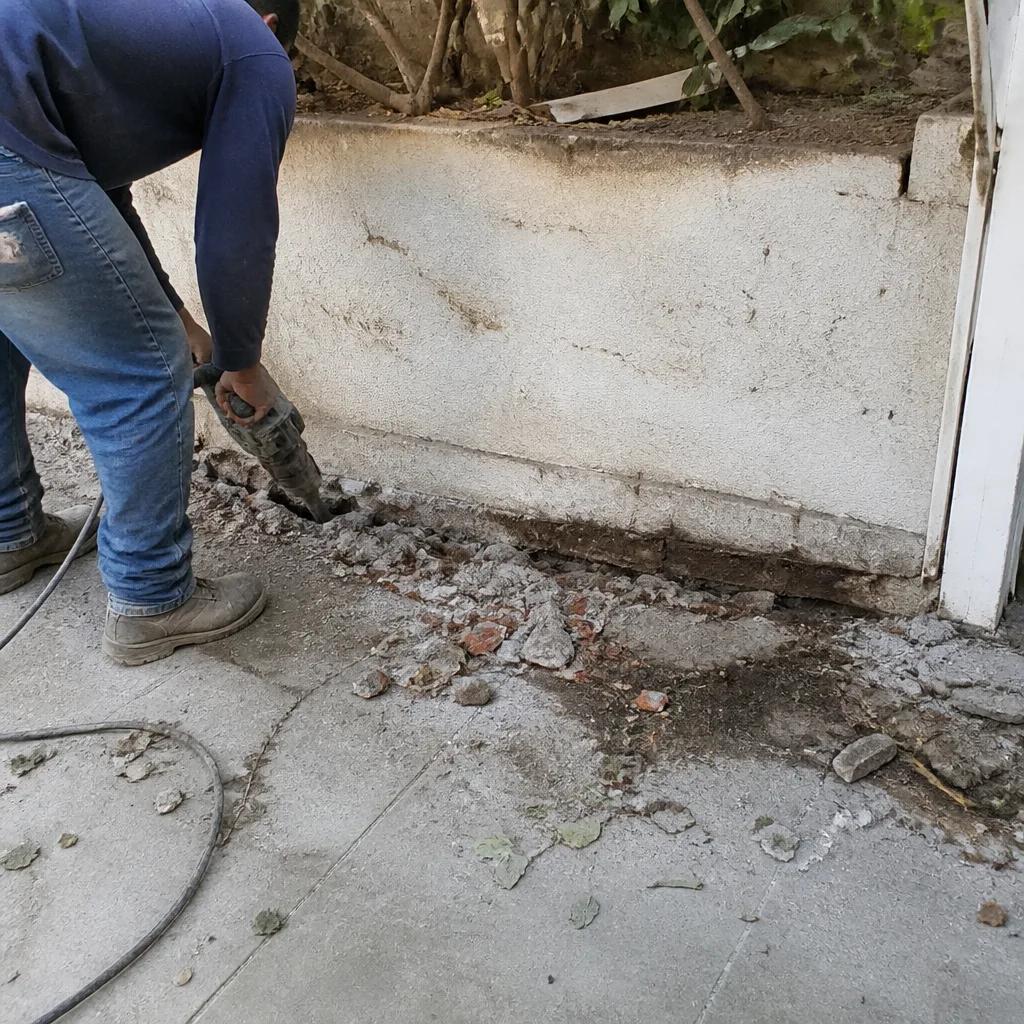 Before
 After
After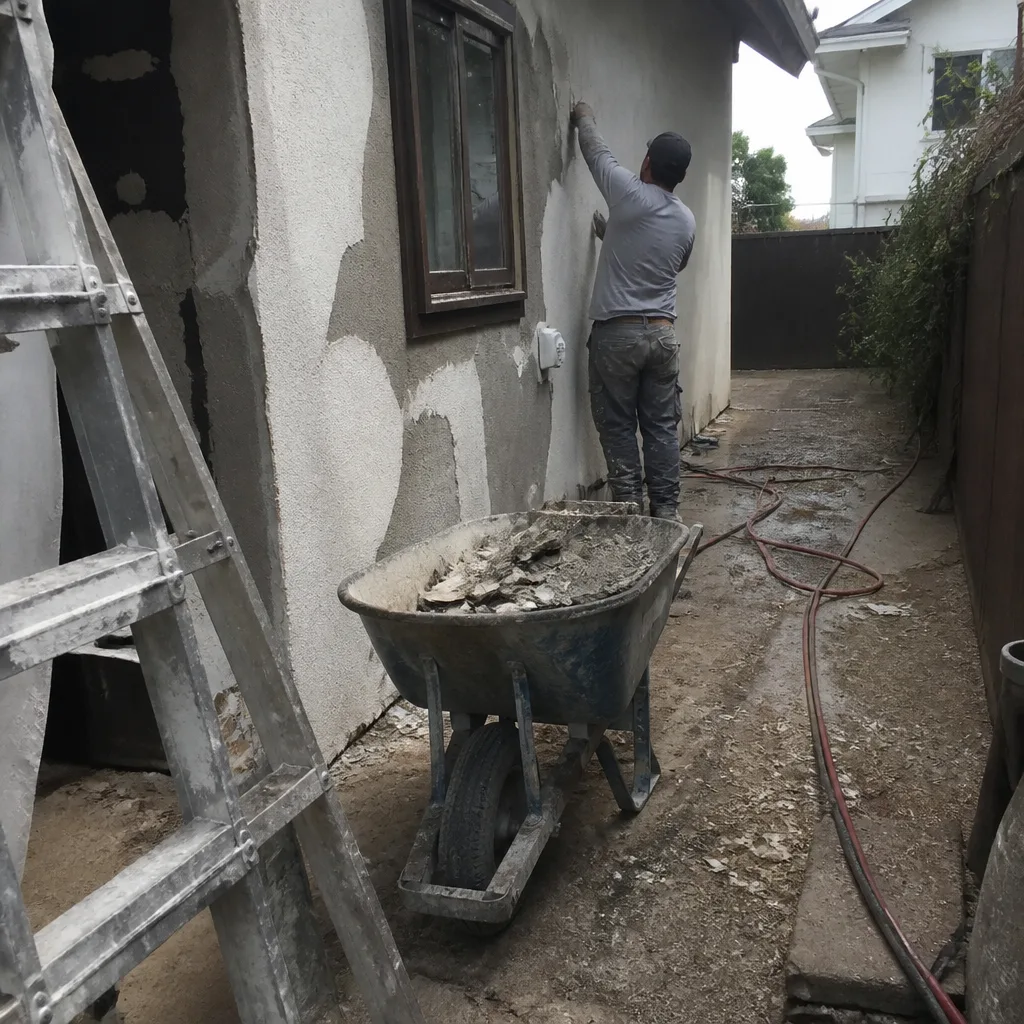 Before
 After
AfterWhen to Call a Professional
Call a professional when the warning signs are structural, not cosmetic: diagonal cracks wider than 1/8 inch, stair-step cracks in block or stucco, horizontal foundation cracks, floor slopes over 1 inch in 15 feet, retaining walls that have moved off plumb, efflorescence on load-bearing block, or any crack that has grown within a 12-month period. If you’ve spotted signs of unpermitted work and you’re planning to sell, refinance, or renovate, call a professional to evaluate the scope and the compliance path. And call when you simply need a trained eye on a hillside drainage situation before the next wet season. Mason Remodeling offers free estimates in Los Angeles. Call (803) 680-2547 to schedule yours, and get a written price before any work begins.
Frequently Asked Questions

A crack is serious if it’s wider than 1/8 inch, runs diagonally from a door or window corner, follows a stair-step pattern through block or stucco, runs horizontally on a foundation wall, or has grown within the last 12 months. Hairline vertical cracks in drywall are usually normal settling. The combination of width, pattern, and change over time determines severity, and Los Angeles’s expansive clay soil means seasonal crack cycling is normal even on sound foundations. Call (803) 680-2547 if you want a professional reading of what you’re seeing.
An unpermitted remodel usually shows up as materials that don’t match the home’s era, out-of-level counters or tile lines, electrical or plumbing work that doesn’t appear in the city’s permit records, rooms missing from the assessor’s square footage, or stucco patches with different textures. The LA Department of Building and Safety maintains an online permit database where you can check what work has been permitted at your address. Unpermitted work can complicate insurance claims, refinancing, and resale, so getting it evaluated matters. For a free estimate on bringing work into compliance, call (803) 680-2547.
Hillside homes in Los Angeles deal with gravity and hydrostatic pressure in ways flat-lot homes never do. Retaining walls leaning off plumb, post-and-pier foundations with shifted posts, and surface drainage flowing toward the house are hillside-specific warning signs. Flat-lot homes in the Valley mostly deal with expansive clay soil cracking, while hillside homes in neighborhoods like Mount Washington or Silver Lake deal with drainage-driven retaining wall failure. Each requires a different reading of the warning signs.
Efflorescence is the white, powdery deposit left when water moves through masonry and evaporates, and it means water is actively traveling through your block wall or stucco surface. Early efflorescence is a drainage and moisture warning sign. Chronic efflorescence over years weakens mortar and degrades masonry from the inside. On Los Angeles block and stucco homes, it’s a sign the wall’s drainage system, weep holes, flashing, or grading, needs evaluation before structural damage compounds. Call (803) 680-2547 for a free moisture and drainage assessment.
No. California law caps the initial down payment for a home improvement contract at 10% of the total project price or $1,000, whichever is less. Any contractor asking for more than that before work starts is violating state law, and that’s a red flag that should stop the project before it begins. Additionally, every legitimate California contractor must hold a current CSLB license, which you can verify online at cslb.ca.gov. Mason Remodeling provides a written price before any work begins on every project, every time.
Foundation repair in Los Angeles typically ranges from $5,000 for minor pier replacement or drainage correction to $30,000 or more for full underpinning or extensive hillside stabilization, depending on the severity of movement, access, and the repair method required. Every foundation project in Los Angeles requires permits and engineering. The cost is driven by the cause of the movement, not just the symptom. For a free evaluation and a written estimate, call (803) 680-2547.
The Bottom Line
Los Angeles homes fail in predictable, readable ways. Diagonal cracks from door corners, stair-step cracks in block, efflorescence on retaining walls, out-of-level counters from unpermitted work, and drainage that slopes toward the foundation are all warning signs with known causes and known fixes. The difference between a $1,000 drainage correction and a $30,000 foundation repair is often just the timing of when the warning sign was read. Learn the signs, monitor them seasonally, verify every contractor before work begins, and when in doubt, get a written evaluation. Your home is telling you what it needs. The skill is learning to listen. This guide is sponsored by Mason Remodeling, a General Contractor in Los Angeles serving the area since 2004. We also specialize in Bathroom Remodeling in Los Angeles and Home Remodeling in Los Angeles.
Written by Isaac Pruett, Owner at Mason Remodeling, serving Los Angeles since 2004. Explore more guides & resources from our team.