
ECO Window Systems General Contractor in Los Angeles: A Homeowner’s Guide
Two identical ECO Window Systems units installed on the same Los Angeles block can perform completely differently in energy savings, air quality, and water resistance. The difference is almost never the product. It’s the general contractor who integrates those windows into your home’s envelope, manages the flashing, seals the rough openings, and pulls the right permits. If you’re shopping ECO Window Systems, the most important decision you’ll make isn’t which series you buy. It’s who installs it. If you’d rather skip the research and talk to someone who does this every week, call (803) 680-2547.
Key Takeaways:
- ECO Window Systems manufactures quality products, but their real-world performance depends on the GC who integrates them.
- In Los Angeles, window installation is a construction project, not a product swap. It involves structural work, flashing, waterproofing, and permits.
- An ECO window quote often excludes the framing, stucco repair, trim, and drywall work required to complete the opening.
- Los Angeles has specific permit and inspection requirements for window replacement, especially for any opening larger than the original.
- You should know the name and photo of every person entering your home before a multi-day window project starts.
What ECO Window Systems Makes, and What That Does (and Doesn’t) Promise
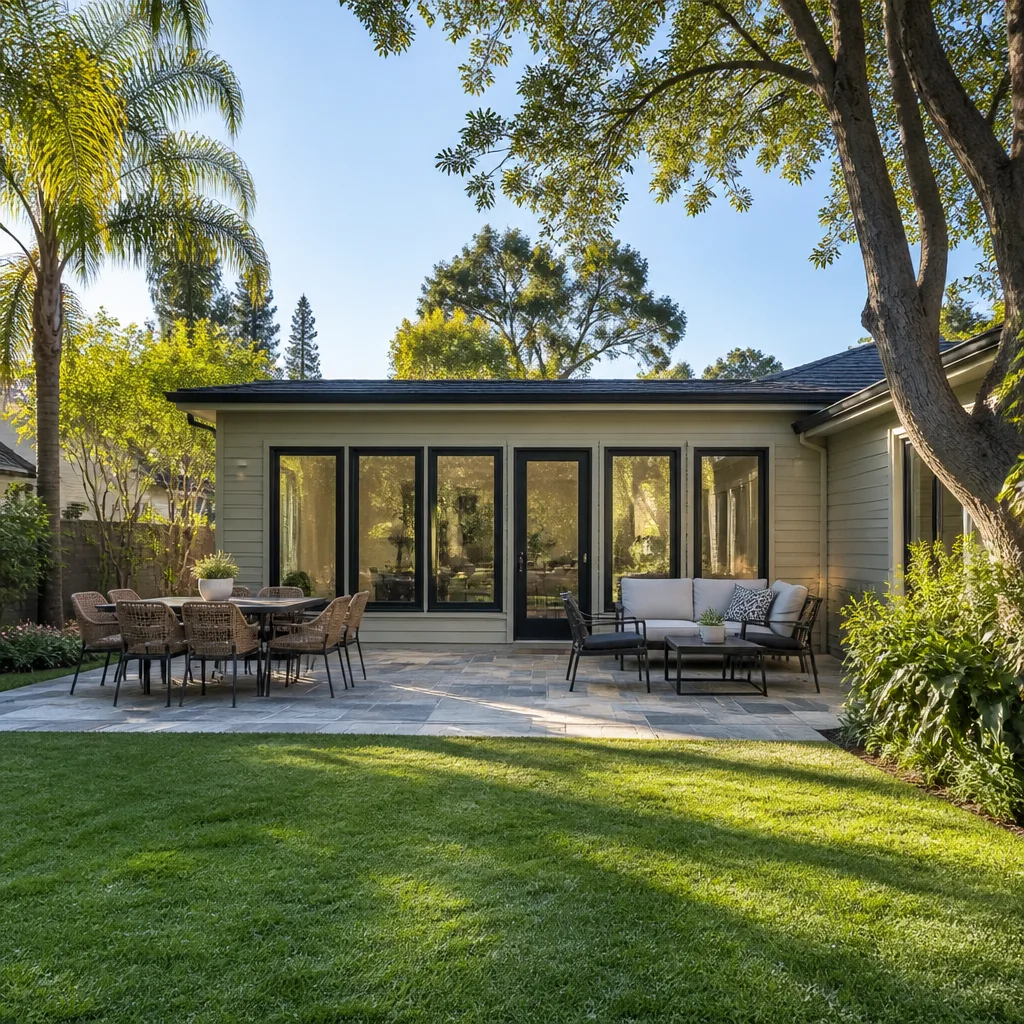
ECO Window Systems manufactures vinyl and aluminum window lines designed for thermal efficiency and sound reduction. Their product catalog includes casement, awning, slider, and fixed-picture configurations. The units are built with multi-chamber frames, low-E glass packages, and weatherstripping that tests well in laboratory conditions. In our experience across home remodeling in Los Angeles, we’ve seen ECO products hold their own against mid-tier competitors on paper. That’s not the weak point.
The weak point is the gap between a laboratory-tested window unit and a window that has been correctly installed into a 1970s stucco wall in Mid-City or a 1920s wood-frame bungalow in Highland Park. Los Angeles housing stock is old and inconsistent. Wall depths vary. Rough openings are rarely square. Stucco thickness changes from house to house. None of that is reflected on a specification sheet. The product promises performance. The building delivers reality. And the person who manages that translation is a general contractor who understands both.
This is where homeowners get tripped up. They compare window brands on U-factor and SHGC. They spend hours reading Mason Remodeling home guides and manufacturer PDFs. Then they hand a premium window unit to a crew that doesn’t flash the sill correctly, and within three years there’s water staining under the window or a draft that runs along the baseboard every time the Santa Anas kick up in the fall. The brand fails the homeowner emotionally, but the brand didn’t fail. The integration failed.
What “Installation” Really Means for ECO Products in Los Angeles
For a general contractor in Los Angeles, installing an ECO window is not a retail-style swap. It’s a five-part construction sequence.
- Opening assessment. Before any window is ordered, the existing opening needs to be measured for square, level, and structural soundness. In older Los Angeles neighborhoods like West Adams and Echo Park, we routinely find rotted framing around windows that haven’t been touched in 40 years. You can’t install a new window into rotted lumber and expect a seal.
- Removal and repair. The old window comes out, and so does whatever damaged material is hiding behind it. That often means cutting back stucco, replacing sill plates or cripple studs, and building the opening back to true dimensions.
- Flashing and waterproofing. This is where Los Angeles weather makes demands people underestimate. We don’t get heavy rain most years. But when an atmospheric river hits in January, every improperly flashed window becomes a leak point. Peel-and-stick flashing, pan flashing at the sill, and proper layering at the head are non-negotiable.
- Unit installation and air sealing. The ECO unit gets set, shimmed, and fastened per manufacturer spec. The gap between the window frame and the rough opening gets filled with low-expansion foam or backer rod and sealant. This is the thermal break that makes or breaks your energy numbers.
- Exterior and interior finish work. Stucco patch, trim, caulking, drywall repair, and paint. This is separate from window installation, but it’s part of the job. And it’s often not included in the window quote.
We pulled a window out of a garage conversion over in Van Nuys last summer where the previous installer had set the ECO unit with nothing but drywall screws and a bead of silicone. The window itself was fine. Everything around it had failed within 18 months. The homeowner had spent good money on a good product and got a bad result because nobody managed the construction around the product.
Southern California Weather and Air Quality: Why Sealing Matters More Here
People think Los Angeles is easy on houses. No freeze-thaw cycles. No snow load. What’s the big deal? But the conditions that actually degrade window installations are all present here, and some are worse than in harsher climates.
We get extreme UV exposure. Polyurethane caulk and exterior sealants degrade faster under relentless sun. A window installed in Los Angeles with the wrong sealant will develop hairline cracks in the bead within two or three years. Then the winter rains find those cracks. Then you get water in the wall cavity. Then you get mold, dry rot, and a five-figure repair.
We also have air quality concerns that most of the country doesn’t deal with. Wildfire smoke in late summer and early fall, inversion layers that trap particulate matter, and seasonal Santa Ana winds that drive dust through every microscopic gap in a building envelope. A properly sealed ECO window isn’t just an energy feature. It’s an air quality feature. A poorly sealed window lets that particulate matter into your home and into your lungs. For families with young children or anyone with respiratory issues in Los Angeles, the difference between a proper air seal and a sloppy one is measurable in indoor air quality.
And then there’s the seismic reality. Los Angeles buildings move. They flex during earthquakes, settle into expansive soils, and shift with temperature swings. A rigid window installation that might pass inspection in Ohio will develop stress cracks in the sealant and gaps in the flashing here. That’s why a general contractor familiar with Los Angeles building behavior matters more than a lowest-bid installer who works from a national playbook.
How to Read an ECO Window Systems Quote
Most ECO window quotes in Los Angeles are product quotes. They include the window units, basic installation labor, and maybe haul-away of the old windows. Here’s what they usually don’t include:
- Stucco repair. Any window replacement that disturbs stucco requires patching, texturing, and painting. That can add $300 to $800 per window depending on the extent of the damage and the texture match required.
- Interior drywall and trim. If the old window had a different depth or style, you’ll need casing, jamb extensions, and possibly drywall repair. Not included in most window quotes.
- Structural framing repair. If the rough opening has rot, termite damage, or is out of square beyond a tolerance, you’re paying for carpentry. Every Los Angeles contractor has opened a wall and found surprises. The honest ones tell you before the job starts and show you photos.
- Permits and inspection fees. Window retrofits that keep the same opening size may not require a permit. Enlarged openings, new openings, or window changes that affect structural loads do. Permit costs in Los Angeles vary by project scope, and inspection scheduling is a service someone has to manage.
- Flashing upgrades. If your house was built before modern flashing standards, doing the job right may require additional materials. Some installers don’t even mention this. They just skip it.
When you get a quote for ECO windows in Los Angeles, ask one question before anything else: “What’s not included that I’ll need to complete this window properly?” If the answer is “nothing,” ask for that in writing. A general contractor in Los Angeles who does this work properly will hand you a line-item scope of work that separates product, installation, construction repair, and finish work. That’s the document that protects you from a surprise invoice at the end.
Permits and Inspections for Window Replacement in Los Angeles
Los Angeles has a straightforward rule with some nuance. Retrofitting windows into existing openings with no change to size, shape, or structure generally falls under minor repair and doesn’t require a building permit. But here’s the nuance: if you’re changing the opening size, adding a window where none existed, altering the wall structure, or working on a historic property, you need permits and inspections.
The permitting authority is the Los Angeles Department of Building and Safety (LADBS). A permit for window work typically requires a plan showing the existing and proposed conditions. Once the work is underway, an inspector needs to see the flashing and the rough opening before it gets closed up. That inspection is a lath or framing inspection, depending on the work scope. If you skip it, you can get flagged at resale or during a later remodel.
Who should manage this? A licensed general contractor is permitted to pull construction permits and manage the inspection sequence. A window sales company that doesn’t hold the right license may install the product but won’t manage the build. If your ECO window project involves structural changes, you want a GC running it, not a product distributor. The distinction matters for your liability and for the quality of the finished job.
One more thing about Los Angeles specifically: hillside properties, coastal zones, and homes over 40 years old all have additional considerations. A house in Mount Washington built into a hillside will have different engineering requirements than a flat-lot ranch in the Valley. Don’t assume the permit process is the same house to house.
Who’s Actually Coming Into Your Home for a Multi-Day Window Project
A window project with five or eight ECO units is rarely a one-day job. It’s three or four days of crews cycling through your house: demolition, repair, installation, finish work. That means you’ll have multiple people in your home across multiple days. You should know who they are before they show up.
This is where the process matters. At Mason Remodeling, every crew member is background-checked and identity-verified. You get the technician’s name and photo before the visit. When they arrive, they’re in a clean, marked uniform and they show a photo ID badge at the door. We call this the Threshold Standard, and it’s the way every job runs. Not as a perk. As a baseline.
For homeowners who are often home alone, parents with young children, or older adults, this isn’t a nice-to-have. It’s the difference between feeling comfortable in your own house and feeling like you’re hosting strangers for a week. You should expect the same from any contractor you hire for an ECO window project in Los Angeles. Ask the question directly: “Will I get the name and photo of every person who comes into my home before they arrive?” If the answer is anything but an immediate yes, keep looking.
Comparing Your Options: What to Ask an ECO Window Installer in Los Angeles
Not every contractor who says they install ECO Window Systems actually has deep experience with them. Mixing product lines is common, but integration skill is what you’re paying for. Here’s a short list of questions that separate a general contractor who understands construction from a sales crew that installs product:
- Will you provide a written price for the complete scope, including construction repair and finish work, before any money changes hands?
- Who manages permits and inspections if they’re required for my project?
- Do you provide the name and photo of every crew member before they arrive?
- If the seal fails or the window leaks within a year, who comes back and what does it cost me?
- Can I see the flashing detail you’ll use before the window goes in?
We’ve watched homeowners ask versions of these questions while comparing a window retailer against a bathroom remodeling in Los Angeles company that also handles windows. The retailer couldn’t answer question two or five. The remodeler could. That’s the tell.
One related note for homeowners in Los Angeles doing broader work: if you’re already replacing windows, consider whether other envelope upgrades make sense at the same time. Some homeowners pair window work with James Hardie siding replacements or new exterior insulation. Coordinating those trades under one contractor reduces the number of times your walls get opened and reclosed. It’s a cost-efficiency decision as much as a construction-logic decision.
When to Call a Pro
Window replacement is not generally a DIY-friendly project, even for confident homeowners. Removing a structural window unit means breaking the weather barrier on an exterior wall. If you get the flashing wrong, you won’t know it until the next heavy rain. If you get the structural support wrong on an enlarged opening, you can compromise the wall. And if you don’t pull the right permit, you’ll carry the liability long after the project is done.
Here’s a simple rule: if your ECO window project involves any change to the opening size, any stucco removal beyond the immediate frame, or any structural repair, call a licensed general contractor. The product price might be the same either way. The construction liability is not.
Related services in Los Angeles: We handle full-scope window replacement and integration as part of home remodel projects and general contracting work across Los Angeles. If you’re replacing windows as part of a larger upgrade, we’ll coordinate the whole sequence under one written price.
The Bottom Line
ECO Window Systems makes a solid product. The vinyl lines are energy-efficient, the aluminum lines are durable, and the pricing sits in a reasonable mid-range for Los Angeles. But the product is one-third of the outcome. The other two-thirds are the flashing, the sealing, the framing repair, and the finish work that determines whether your windows actually perform in Southern California conditions.
In Los Angeles, a window is not a product you bolt into a wall. It’s an envelope penetration that has to be managed by someone who understands stucco, seismic movement, UV degradation, wildfire smoke, and the LADBS permit process. That someone is a general contractor who does this work week after week in your city, not a phone rep reading from a national catalog.
If you’re in Los Angeles and need help navigating an ECO window project, Mason Remodeling offers free estimates. Call (803) 680-2547 and we’ll walk you through the full scope, in writing, before any work starts.
Frequently Asked Questions
A complete ECO window replacement in Los Angeles, including construction repair and finish work, typically runs $900 to $2,200 per window depending on the unit series, the condition of the rough opening, and whether stucco or drywall repair is needed. Product-only quotes will look lower, but they exclude the construction work required to complete the job properly. Call (803) 680-2547 for a written line-item quote specific to your project.
Retrofit replacements that keep the same opening size typically don’t require a permit. Enlarged openings, new windows, structural alterations, or work on historic properties do require LADBS permits and inspections. A licensed general contractor can manage the permit and inspection sequence as part of your project scope.
A single-window retrofit can take one day. A multi-window project with stucco repair, flashing upgrades, and interior finish work typically takes three to five days, depending on the scope and the number of trades involved. The finish work often takes longer than the window installation itself.
It shouldn’t, if you’re working with a contractor who provides a written price before any work begins. What you want to avoid is a verbal estimate that grows on the final bill. Ask for a written line-item scope that separates product, construction repair, and finish work. That’s the document that holds the price steady.
Written by the team at Mason Remodeling.
Need Construction Help?
Call Mason Remodeling - licensed & insured, here with fast after-hours help in Los Angeles.
(803) 680-2547