
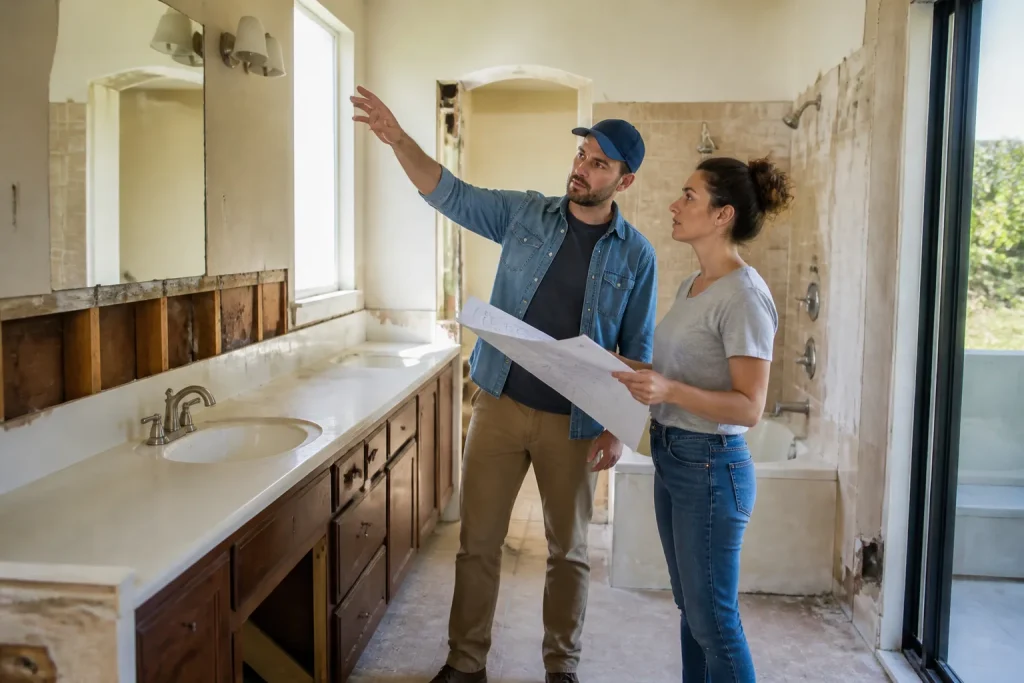
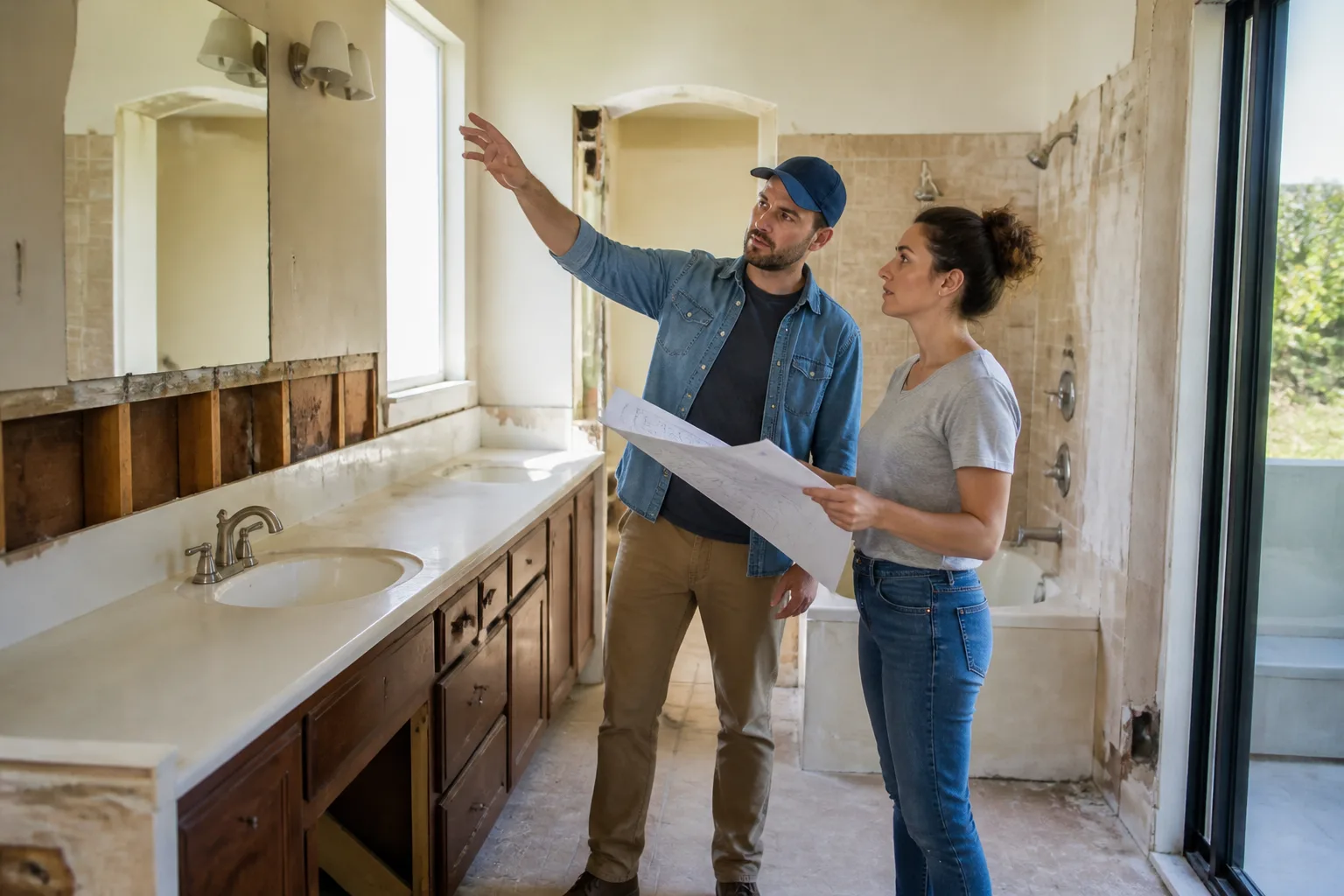
Bathroom Remodeling: Repair or Replace? How Los Angeles Homeowners Decide
Most Los Angeles bathrooms deserve a full replacement, not another patch. The repair-or-replace call comes down to water: if moisture has reached the substrate behind your tile, the shower pan, or the subfloor, a cosmetic fix will fail within 18 months and the final bill will include mold remediation. Call (803) 680-2547 if you’d rather have a straight answer than a guess.
The Real Cost of Guessing Wrong in Los Angeles
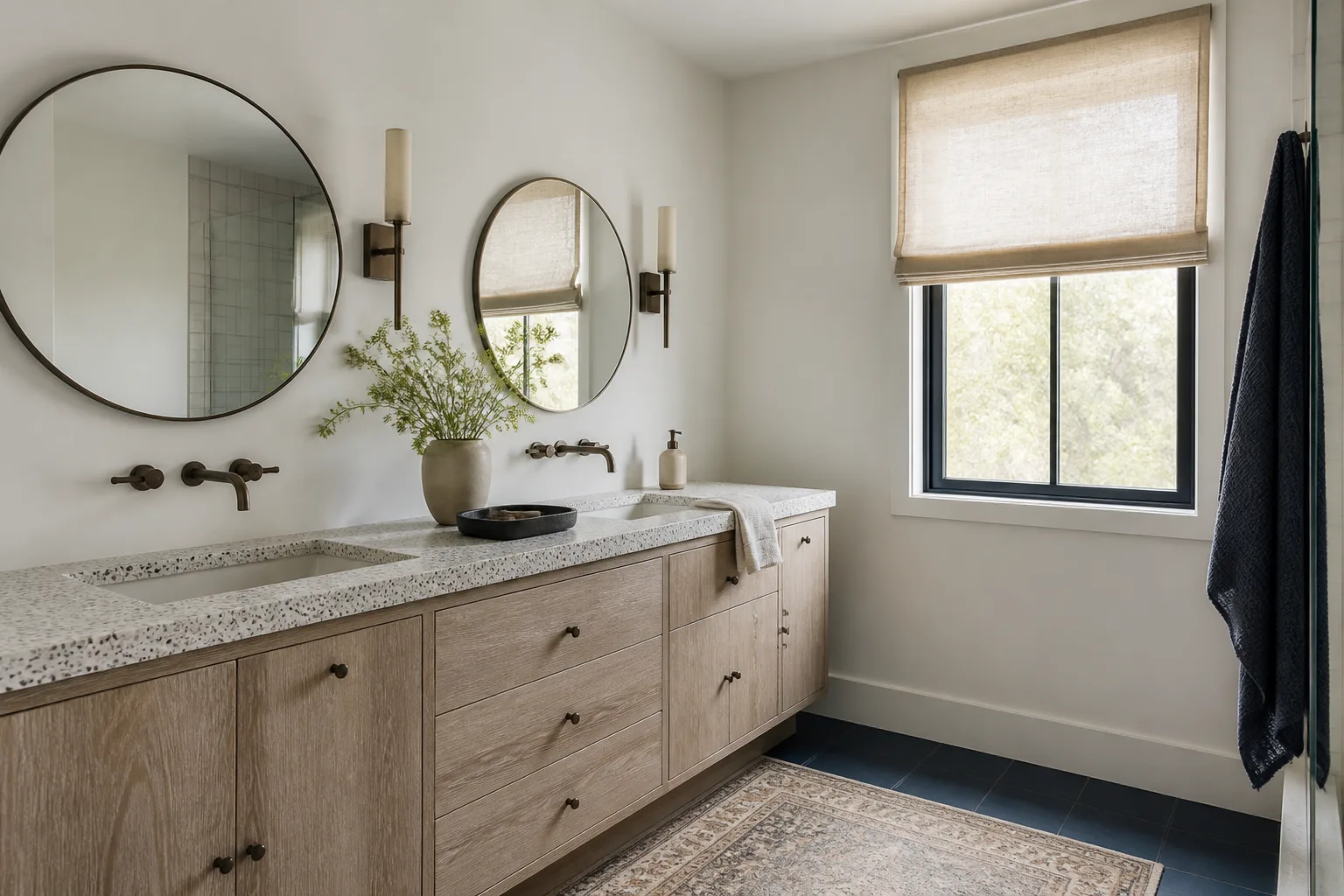
Regrouting a shower runs $300 to $800 in Los Angeles. That’s the surface price. The problem is that grout fails for a reason, and in this city that reason is usually water intrusion. Los Angeles homes built before 1980 often have single-layer drywall behind shower tile, not cement board. Drywall acts like a sponge once water gets past the grout line, and you won’t know until the tile starts moving or the baseboards swell.
We pulled a shower surround out of a 1962 ranch in Granada Hills last month. The homeowner had regrouted twice in three years at about $600 each time. Behind the tile, the drywall had turned to the consistency of wet cardboard, and the studs showed early rot. The fix was a full replacement, including framing repairs. Total cost: roughly $14,000. The two regrouts bought about fourteen months of cosmetic improvement and delayed the real work until it got more expensive.
The lesson isn’t that regrouting is a scam. It’s that you need to know what you’re regrouting over. A quick visual check won’t tell you. The grout can look fine on the surface while the substrate underneath is saturated.
Run These Three Checks Before You Decide
You don’t need to open any walls to get a strong read on whether your bathroom is a candidate for repair or replacement. These checks take under an hour total and will save you from spending repair money on a teardown.
- The water intrusion test: Run your shower for five minutes with the curtain or door open so water hits the tile. Watch the grout lines closely. If the grout changes color from light to dark where the water hits, it’s absorbing moisture. That means the seal is gone and water is traveling behind the tile. If you see water beading on the grout, the seal is holding and a regrout might be enough.
- The substrate flex check: Press firmly on several tiles around the shower floor, the lower walls, and anywhere you’ve seen cracking. Movement is the tell. Tile should not flex. If it does, the backing material has failed or is failing, and a repair will not fix the problem. You might also tap lightly with a screwdriver handle. A hollow sound means the tile has lost bond with the substrate.
- The drain flow rate test: Fill a five-gallon bucket with water and pour it into the shower drain as fast as it will take it. A properly functioning 2-inch drain should swallow five gallons in under 30 seconds. If it backs up or drains slowly, you have a restriction somewhere in the line. Slow drainage means standing water, which means water wicking up into the walls from below.
In Los Angeles, the third test matters more than homeowners expect. The city’s hard water leaves mineral buildup inside drain lines over decades, and older homes often have cast iron pipes that have rusted from the inside out. A slow drain is rarely just a clog. It’s usually a plumbing condition that a repair won’t address.
When a Repair Becomes a Remodel in LADBS’s Eyes

Los Angeles has a specific threshold that most homeowners only learn about after they’ve started work. The Los Angeles Department of Building and Safety considers work a repair when you’re replacing like for like: new tile over intact substrate, a new vanity in the same footprint, a new toilet on the same flange. No permit required.
The project becomes a remodel when you change the layout, move plumbing, replace the shower pan, open walls to replace framing or waterproofing, or alter any electrical circuit. At that point, a permit is required, and unpermitted work can come back to bite you at resale in Los Angeles, where buyers and their agents routinely pull permit records.
Here’s the practical translation. If your shower pan is cracked and you need to pull it and replace the waterproofing beneath, you’ve crossed into remodel territory. If the tile is sound but the grout is tired, you’re still in repair territory. Most Los Angeles homeowners who’ve owned their home for more than ten years and have never touched the bathroom fall on the remodel side of that line, whether they planned to or not.
Permit costs in Los Angeles run from roughly $500 to $2,000 depending on the scope, and the timeline adds two to four weeks for plan review and inspections. That’s not bureaucratic overhead. It’s proof that the work was done to code, and that matters when you sell.
What Los Angeles Buyers Actually Penalize
Resale context in Los Angeles is counterintuitive. A dated but intact bathroom is fine. Buyers will renovate it themselves, and they’ll factor that into their offer. What buyers penalize is an obvious patch job. New grout over water-damaged tile, a fresh coat of paint over a bulging wall, a new vanity installed over a floor that slopes toward the tub. Those reads as deferred maintenance, and in a city where single-family inventory is tight and buyers are already stretched, deferred maintenance is the fastest way to lose an offer or take a lowball.
We’ve walked through enough open houses in Los Angeles to know what buyer’s agents flag first. They pull the shower curtain. They run the faucet and watch the drain. They press on the tiles. An agent who finds a soft tile or a slow drain will tell their client to budget $20,000 to $40,000 for a bathroom remodel, and they’ll write that into the offer as a repair credit. An intact but dated bathroom might cost you $15,000 to $25,000 in perceived value. A patch job that gets caught costs you the full remodel plus the repair credit.
None of this means you should remodel solely for resale. But if you’re deciding whether to repair or replace and you might sell within five years, the replacement is the better financial move in this city. The repair will become the buyer’s negotiation leverage.
Why the Written Scope Matters More in Bathrooms Than Any Other Room
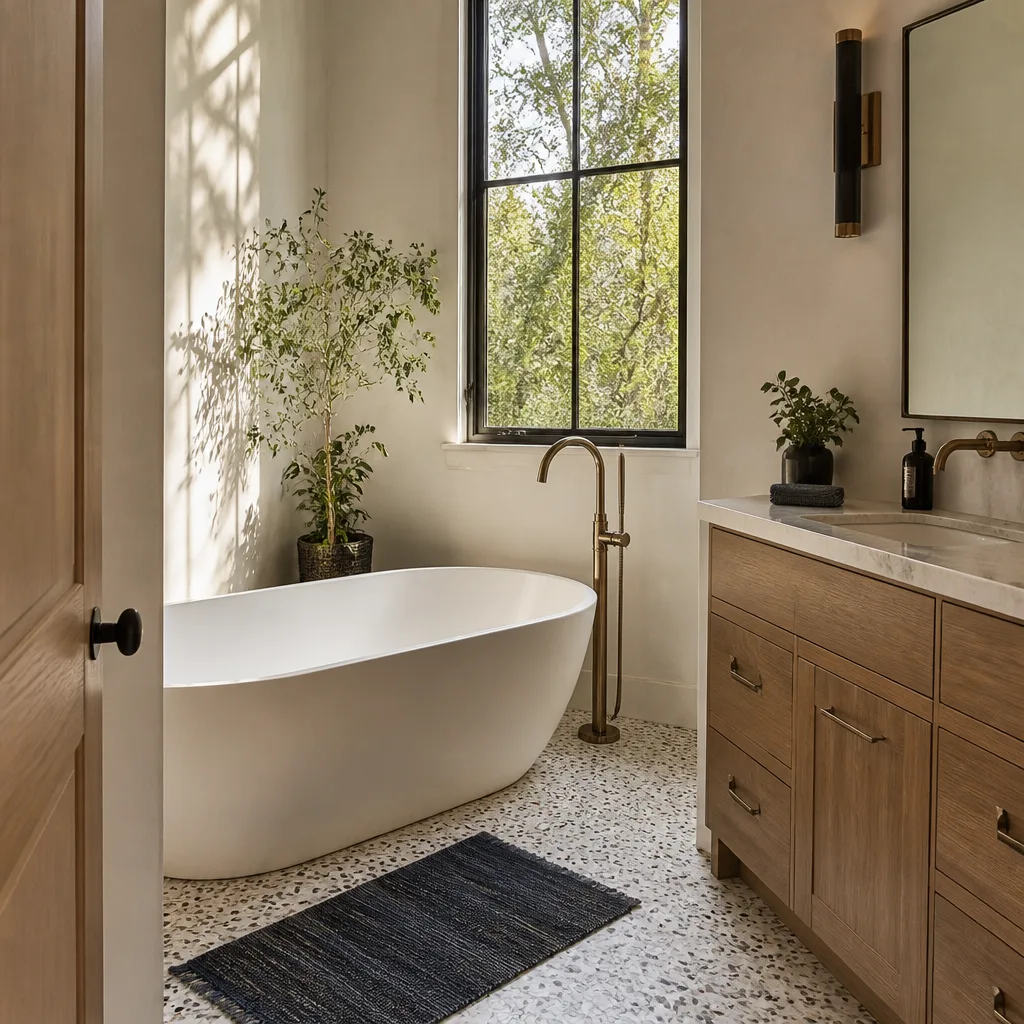
Bathrooms conceal more problems per square foot than any space in a Los Angeles home. That’s a function of water, age, and construction standards that predate modern waterproofing. The failure points are invisible until you open walls: failed p-traps, galvanized steel supply lines that have rusted to half their diameter, mold behind tile, dry rot in the framing.
This is why a written scope before walls are opened is critical. Not a verbal estimate. A written line-item document that states what work will be performed, what it costs, and what happens when hidden conditions are discovered. In Los Angeles bathroom projects, hidden conditions change the scope by 30 to 50 percent routinely. That’s not contractor padding. That’s the reality of opening walls in a 1960s or 1970s Los Angeles home and finding what sixty years of moisture left behind.
At Mason Remodeling, we write the price before any work starts, and we write the scope so the homeowner knows exactly what’s included and what happens if we find something unexpected. We’ve learned that homeowners would rather have an honest number up front than a low number that grows. The surprise is the thing that breaks trust, not the cost.
We also specify materials by brand and model. In a Los Angeles bathroom, that typically includes Kohler or Moen for fixtures, Schluter for waterproofing, and KraftMaid or Wellborn for cabinetry. You should know before demolition starts what’s going back in, because that’s the difference between a written price that holds and one that’s based on somebody’s best guess.
Repair vs. Replace: The Los Angeles Decision Tree
Here’s how we think about it, walked in order. Start at the top and work down.
- Is your home pre-1980 and has the bathroom never been gutted? If yes, you’re almost certainly in replace territory. The waterproofing, if it exists at all, is not up to current standards, and the plumbing is at the end of its service life.
- Did the water intrusion test show the grout absorbing water? If yes, the waterproofing has failed and a surface repair will not hold. Replace the shower assembly.
- Did the substrate flex check show any movement? If yes, the tile bed or the backing has failed. Replacement is the only fix that lasts.
- Is the drain slow despite snaking and cleaning? If yes, the line itself may be compromised. Replacing the shower or tub assembly gives you a chance to replace the drain line at the same time, which is the cost-effective way to do it.
- Does the bathroom otherwise function well and the only issue is cosmetic surface wear? If yes, and your home is post-1980 with intact waterproofing, a repair may be the right call. Repaint, regrout, replace the vanity top, swap the fixtures. Expect $3,000 to $8,000 for a cosmetic refresh in Los Angeles.
- Is the bathroom functional enough to keep but you’re considering selling within five years? If yes and the work needed is on the replacement side of the line, do the replacement now. In Los Angeles, you’ll get the money back in sale price and days on market.
For most Los Angeles homeowners, the answer lands on replacement. That’s not a sales pitch. It’s what the housing stock and the water damage patterns tell us.
When to Call a Pro
You can run the three checks yourself. You can also replace a vanity, swap a toilet, even retile a backsplash if you’re handy. But anything that involves opening walls, moving plumbing, replacing a shower pan, or dealing with mold should go to a licensed contractor. Los Angeles building code is specific, the permit process is unforgiving, and the consequences of a botched waterproofing job don’t show up for a year, then they show up all at once.
If your home is pre-1980, we’d recommend an inspection before any decision. Open one wall in the shower area. See what’s behind it. That single look will tell you more than any amount of guessing, and it costs far less than a wrong repair.
For homeowners in Los Angeles who want a straight answer, we offer bathroom remodeling in Los Angeles with a written price before any work begins and a written guarantee on every completed project. If the work isn’t right within a year, we make it right. That’s the standard, and it’s written down.
Related services: general contractor in Los Angeles and home remodeling in Los Angeles.
The Bottom Line
In Los Angeles, the repair-or-replace decision is a water decision. If moisture has reached the substrate, the shower pan, or the framing, repair money is wasted money. The city’s older housing stock, hard water, and buyer scrutiny at resale all push toward replacement for anything built before 1980 or showing signs of water intrusion. Run the three checks, understand the permit threshold, and get a written scope before any walls come down.
If you’re in Los Angeles and need help deciding, Mason Remodeling offers free estimates. Call (803) 680-2547 and we’ll tell you honestly whether your bathroom needs a repair or a replacement.
Frequently Asked Questions
A full bathroom remodel in Los Angeles typically runs $18,000 to $45,000 for a standard 5×8 foot bathroom, depending on material choices and hidden conditions. A cosmetic refresh costs $3,000 to $8,000. A shower-only replacement runs $8,000 to $15,000. These are real ranges for this market, not national averages. Call (803) 680-2547 for an exact quote based on a walk-through.
It depends on the contractor. At Mason Remodeling, the written price covers the agreed scope, and if hidden conditions are discovered, we document them, show you what we found, and get your approval on any change in writing before proceeding. You’ll never get a surprise invoice at the end. What you will get is a clear explanation of what changed and why.
Yes. When the work crosses the LADBS threshold for remodeling, we pull the permits, schedule the inspections, and ensure the work passes before we consider it complete. Unpermitted work in Los Angeles is a liability at resale, and we won’t put a homeowner in that position.
Plan on three to six weeks from demolition to final inspection, depending on the scope and whether the project requires plan review at LADBS. A cosmetic repair takes one to two weeks. The permit review timeline in Los Angeles is what it is, and we build that into the schedule up front. Call (803) 680-2547 for a timeline based on your specific scope.
Written by the team at Mason Remodeling.
Need Construction Help?
Call Mason Remodeling - licensed & insured, here with fast after-hours help in Los Angeles.
(803) 680-2547