
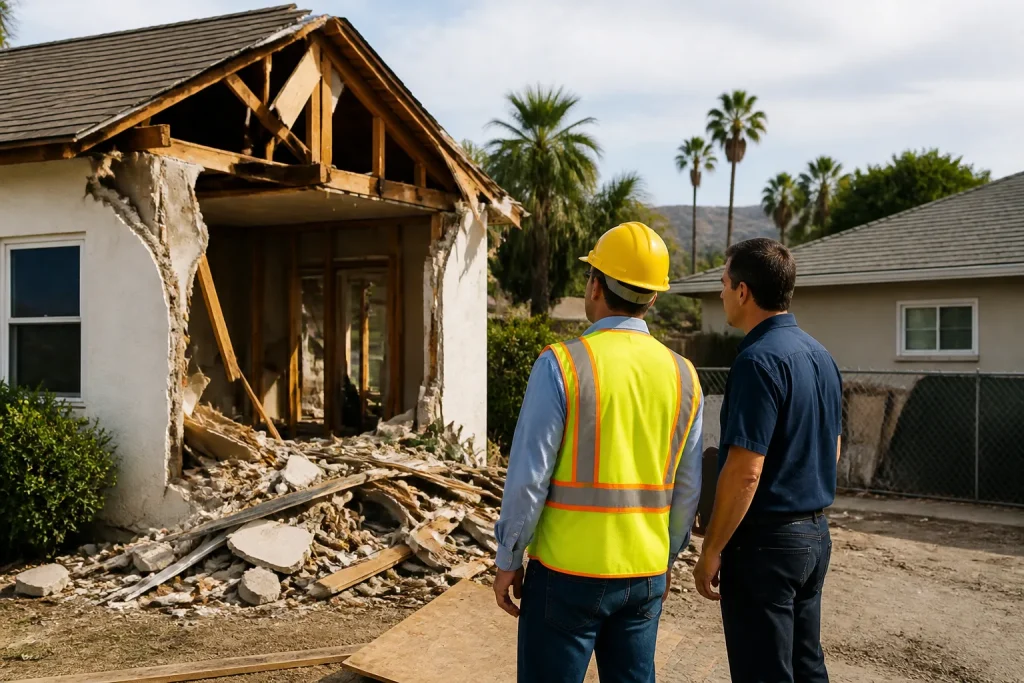
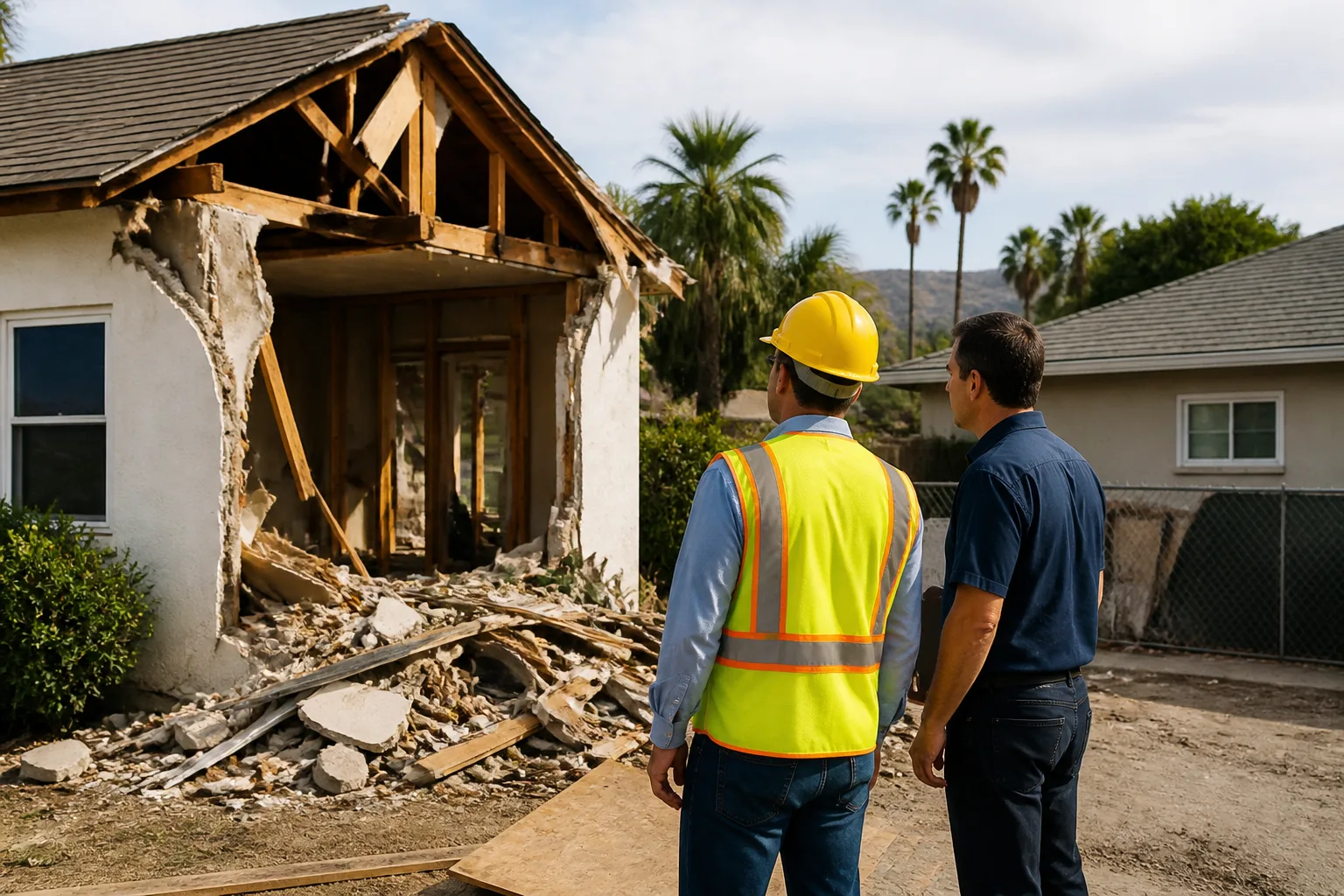
Emergency General Contractor Near Me: What Los Angeles Homeowners Should Do First
When a water line lets go inside a wall at midnight, the first call you make should not be to a contractor. It should be to your water main shutoff valve. The first 30 minutes of any home emergency determine whether you’re facing a $900 repair or a $40,000 remediation, and most Los Angeles homeowners burn that window searching “emergency general contractor near me” while water keeps moving through the ceiling. If you’d rather skip the guesswork and talk to someone who handles this every week, call Mason Remodeling at (803) 680-2547. Otherwise, here’s exactly what to do before you call anyone.
Stop the Damage Clock Before You Search for a Contractor
A burst supply line behind a kitchen wall can dump four to eight gallons per minute. That’s not a slow drip. In an hour, you’ve added thousands to the job, soaked the subfloor, and likely compromised the ceiling below. Every Google search you type while water runs is, bluntly, making the project more expensive. Los Angeles homes built before the 1980s often have galvanized steel supply lines that corrode from the inside out, and when they fail, they fail dramatically. We’ve pulled drywall off a wall in Studio City where the pipe had been leaking inside the cavity for a week before anyone noticed, and the framing had to be replaced, not just dried.
Your first five moves, in order:
- Shut off the water main. Every home in Los Angeles has one, usually near the front hose bib or in a ground-level utility box. If you don’t know where yours is, find it this weekend, not during an emergency. Turn the valve clockwise until it stops.
- Kill the power to the affected area if water is near outlets or the panel. Water and electricity mix badly. Flip the breaker for that room. If the panel is wet, do not touch it. Call your utility provider.
- If you smell gas, shut off the gas meter. A quarter-turn on the meter valve, using a wrench if needed, stops the flow. Then get outside and call your gas company. Do not flip switches or strike matches.
- Take photos and video before you move anything. Your insurance adjuster will want to see the starting condition, not the post-cleanup version. Wide shots first, then close-ups.
- Isolate the area. Close doors, block it off, keep kids and pets out. Wet drywall collapses without warning, and soaked ceilings can drop hundreds of pounds onto whoever is standing beneath them.
Once those five things are done, you can call a contractor and have a coherent conversation instead of a panicked one. That coherence saves you money, because you’ll be able to describe the scope accurately and compare written estimates without emotional pressure.
Why “24-Hour Emergency Contractor” Pricing Is Often a Trap
There are legitimate 24-hour crews in Los Angeles, and there are operations that bank on the fact that a stressed homeowner at 2 a.m. will say yes to almost any number. The latter group counts on you not asking for anything in writing. They arrive fast, “start right away,” and the invoice looks very different from the verbal estimate. We hear this story constantly: a homeowner in Silver Lake gets quoted $1,800 over the phone, a crew shows up, and by noon the next day the bill is $7,400 with a list of extras nobody approved.
Before anyone starts work in your home, demand three things:
- A written price. Not a verbal range, not a handshake number. A line-item document that lists materials, labor, and scope. If a contractor won’t put it in writing before starting, that’s your signal to call someone else. Mason Remodeling delivers a written price on every project before a single tool is unpacked. This is not a favor we do for nervous customers. It’s how we run every job.
- A license number you can verify. In California, that means the CSLB, the Contractors State License Board. The lookup tool is at cslb.ca.gov, and it takes under two minutes. Type in the number, confirm the name matches, check the license is active and not suspended, and note any complaints or citations. If the contractor hesitates to give you the number, that’s your answer.
- Names. Who is coming? What’s their name? What do they look like? You’re about to let strangers into your home in the middle of the night. If the company can’t tell you who’ll be at your door, keep the door locked.
In our experience, a true emergency rarely requires work to begin the same second. The water is off. The power is off. The gas is off. Your home has stopped getting worse. That’s when you can afford 20 minutes to verify the person who’s about to perform structural work on your house.
The CSLB Lookup: Your Two-Minute Shield Against Scams

California makes it surprisingly easy to check a contractor’s license, and most homeowners skip it because they don’t know the tool exists. Here’s the drill. Go to cslb.ca.gov, click “Check a License,” and enter the contractor’s license number or business name. You’ll see the current status, the license classification, when it expires, any workers’ comp coverage, and a record of complaints or disciplinary actions. You’ll also see a bond amount. Contractors in California must carry a license bond, and that bond exists to protect you if the contractor violates state law on your project.
Look for three specific things:
- Status says “Active.” Anything else means the license is suspended, expired, or revoked. Do not hire them.
- Classification matches the work. General building contractors hold a “B” license. If someone with a C-54 tile license offers to remodel your entire Los Angeles bathroom, that’s the wrong classification and illegal scope creep.
- No recent disciplinary actions that worry you. A single old complaint may mean little. A pattern of unresolved issues should end the conversation.
We’re licensed, we’re insured, and we’ll happily provide our license number before we set foot near your home. You should expect that openness from anyone you call. Los Angeles has more than 10,000 licensed general contractors, so there’s no shortage of legitimate options. The scammers depend on you not spending two minutes on a state website.
Structural Emergency vs. “Wait Until Morning” Damage
Not every middle-of-the-night disaster is an actual emergency. Knowing the difference saves Los Angeles homeowners thousands of dollars in after-hours premiums, because “emergency” dispatch rates are real and often triple standard pricing. If your home is not actively taking on more damage and no one is at risk, you can usually wait until daylight and call a regular crew that works with written estimates and sane pricing.
True structural emergencies, where you should act immediately:
- A roof puncture that lets rain pour directly into the living space, especially during Los Angeles winter storms
- A retaining wall that has shifted and is threatening a slope, a pool, or the home’s foundation
- A gas leak that you cannot stop at the meter
- A sewer backup that is flooding the home with contaminated water
- Fire damage that has compromised load-bearing framing
Damage that can typically wait until a normal business morning:
- A burst pipe that is now off at the main, with fans running and standing water removed
- A ceiling leak that has slowed to a drip and is contained in a bucket
- Cracked or lifted tile with no active water
- A door that won’t latch due to settlement, with no other signs of movement
Here’s the thing: once water is stopped and power is off, a few hours rarely change the repair scope. What changes is the price you’ll pay for a crew rolling out in the middle of the night. If you can contain it, document it, and wait for a reputable Los Angeles contractor who gives you a written number before starting, you almost always come out ahead. We’ve told homeowners this over the phone at 11 p.m., and they’re consistently surprised that a contractor would talk them out of paying emergency rates. That’s the point of working with someone who sees your house as a long-term project, not a one-night invoice.
What Pre-Arrival Verification Looks Like When It Matters Most

Imagine this scenario: you’ve shut off the water, the ceiling is sagging in the hallway, your kids are sleeping in the back bedroom, and now you have to open your front door to a stranger at 1 a.m. That’s the moment when “background-checked” stops being a brochure phrase and becomes the only thing you care about. In a high-stress emergency, the last thing a homeowner should have to do is decide whether the person on the doorstep is actually who they say they are.
That’s why our process, which we call the Threshold Standard, is built around pre-arrival verification. Every crew member is background-checked and identity-verified. Before a technician ever arrives, you receive their name and photo. When they show up at your door, they’re in a clean, marked uniform and they hand you a photo ID badge that matches the name and face you were already sent. You know exactly who is walking into your house before the door opens. In an emergency, when your pulse is already elevated and your judgment is stretched thin, this matters more than on any normal project. You should never have to guess.
This is the same standard we apply to every job, from a full home remodeling in Los Angeles project to a middle-of-the-night water extraction call. The circumstances change. The verification doesn’t.
For the record, we also answer our phone with a live person 24 hours a day, every day of the year, including weekends and holidays. No call trees, no voicemail loops, no “we’ll get back to you on Monday.” When you call at 2 a.m., a human answers. That’s not a marketing line. It’s how we’ve run since 2004.
When to Call a Pro (Instead of Watching YouTube)
There’s a real temptation in the middle of a crisis to grab your phone and start watching tutorial videos about patching drywall or sweating copper pipe. We respect the impulse, but some things should not be learned on the fly at 2 a.m. If the damage involves load-bearing walls, electrical wiring, gas lines, or a roof that requires you to climb, that’s a professional’s job. The risk of injury or making the problem significantly worse outweighs any money you might save. Wet drywall is heavy. Wires are unforgiving. Gas is invisible until it isn’t.
What you can safely do yourself: shut off the water, kill the power, document everything, move valuables out of the path, and call your insurance provider. Those are homeowner tasks. Everything after that is where experience earns its keep.
If you’re in Los Angeles and need related help beyond emergency triage, our general contractor services in Los Angeles cover the full spectrum from urgent repairs to planned remodels. And if the bathroom took the hit, we’ve handled hundreds of water-damaged bathroom remodel projects in Los Angeles over the years. Water destroys cabinets, subfloors, and tile assemblies fast, and rebuilding them correctly matters as much as drying them out fast.
The Bottom Line
The first 30 minutes of a home emergency are not about hiring anyone. They’re about stopping the damage and documenting what happened. Shut off the water, kill the power, photograph everything, and isolate the space. Then, once the house is stable, you can evaluate contractors without panic driving the decision. Demand a written price before work starts, verify the license on the CSLB site, and ask exactly who is coming to your door. In Los Angeles, where housing stock ranges from 1920s bungalows in Highland Park to mid-century builds in the Valley, the specifics change but the fundamentals don’t. A legitimate contractor will never pressure you to skip the written estimate or the license check. If you’re in Los Angeles and need help, Mason Remodeling offers free estimates. Call (803) 680-2547 and a live person will answer, day or night. Visit Mason Remodeling home to learn more about how we work.
Frequently Asked Questions
For a typical burst-pipe incident in Los Angeles, expect $2,500 to $8,000 for water extraction, drying, and drywall replacement, with more extensive structural repairs pushing the total to $15,000 or higher in severe cases. The final number depends on how fast the water was shut off, how long it soaked, and whether framing or electrical work is involved. Get a written line-item estimate before any work starts, and call (803) 680-2547 for an exact figure on your specific situation. Estimates are free.
It shouldn’t, if you have a written price before the crew begins. A reputable Los Angeles contractor will document the scope, put the number in writing, and hold to it unless you approve a change. That’s the standard at Mason Remodeling. No verbal estimate that grows on the final bill. If a contractor won’t give you a written price, that’s a red flag, especially in an emergency where you’re already under pressure. Call (803) 680-2547 and we’ll put it in writing before anything starts.
Usually, yes, once the water is shut off at the main, power is off to the affected area, and you’ve documented the damage with photos. If the home is not taking on more damage and no one is in danger, waiting a few hours for daylight and a reputable crew with standard pricing almost always saves you money. Emergency dispatch rates can run triple normal pricing, and the actual repair scope doesn’t change between 2 a.m. and 8 a.m. if the water is already off.
Yes, when the repair requires them. Most emergency water extraction and drywall replacement doesn’t need a permit, but if structural framing, electrical, plumbing, or load-bearing elements are involved, the work has to meet Los Angeles building codes. We pull permits, schedule inspections, and make sure the work passes before it’s closed out. That’s part of the written scope and the written guarantee. Call (803) 680-2547 to ask about your specific situation.
Written by Isaac Pruett, Owner at Mason Remodeling, serving Los Angeles since 2004.
Need Construction Help?
Call Mason Remodeling - licensed & insured, here with fast after-hours help in Los Angeles.
(803) 680-2547